Chapter 3 of 12Budgeting Your Move: Total Cost of Renting, Deposits, and Monthly Bills
- 1How Renting Works in the Netherlands: Systems, Segments, and Key Terms
- 2Choosing Where to Live: Cities, Neighborhoods, and Commute Strategy
- 3Budgeting Your Move: Total Cost of Renting, Deposits, and Monthly Bills
- 4Finding Legit Listings: Portals, Agents, and Avoiding Scams
- 5Application Toolkit: Documents Dutch Landlords Expect and Income Rules
- 6Viewings and Bidding: Standing Out Without Overpaying
- 7Contracts and Law: Regulated vs Liberalised, Clauses, and Your Rights
- 8Registration, Permits, and Taxes: BRP, BSN, IND, and Municipal Charges
- 9Move-In & Utilities: Handover, Meter Readings, Energy Labels, Internet
- 10Living as a Tenant: Maintenance, Service Charges, Rent Increases & Huurcommissie
- 11Special Situations: House Sharing, Subletting, Short-Stay, Social Housing
- 12Ending the Tenancy: Notice, Check-Out, Deposit Returns, and Disputes
Table of Contents
Introduction
Renting in the Netherlands can be surprisingly front-loaded. Beyond the monthly rent, you’ll face a security deposit, municipal and water-authority taxes, utilities, internet, and service charges (“servicekosten”). Some fees are illegal (e.g., “key money”), while other costs vary by city, housing type, and energy performance. This chapter explains every euro you should plan for—what’s due up front, what repeats monthly, and which costs you can dispute or reduce.
We use up-to-date Dutch rules, including the Wet betaalbare huur (Affordable Rent Act), 2025 rent-increase caps, the 2-month legal maximum deposit, and the rules for service-charge settlements. We also point out local quirks (like unfurnished often meaning no flooring or lights), and regional taxes that differ between Amsterdam and other cities.
What This Chapter Covers
- All one-off costs (deposit, first rent, legitimate/illegal fees, move-in basics).
- All monthly costs (base rent, service charges, energy, water, internet, municipal and water-board taxes, insurance).
- How the points system (WWS) limits rent in social and mid-market housing.
- 2025 rent-increase caps for social, mid-market, and free-sector housing.
- Step-by-step: check your maximum legal rent, dispute service costs, reclaim illegal fees, and protect your deposit.
- Realistic example budgets and tables you can copy.
Quick Budget Snapshot
Use this as a checklist before you place a rental application.
One-off (move-in) costs
| Cost item | Typical amount | Notes |
|---|---|---|
| Security deposit | 1–2 × monthly basic rent | Legal max is 2 months; return within 14 days after move-out (deductions must be specified). |
| First month’s rent | 1 × monthly rent | Due at key handover in most tenancies. |
| Legitimate admin costs | €0–€50 (often €0) | Only concrete services (e.g., nameplate) may be charged. Charging for drafting the contract itself is not allowed. |
| Furniture & basics | €500–€3,000 | Depends on furnished vs. unfurnished. Unfurnished may lack flooring and fixtures. |
| Moving/cleaning | €150–€800 | DIY vs. professional movers, cleaning at handover. |
| Registration (BRP) | €0 | Register within 5 days if staying > 4 months. |
Monthly (recurring) costs
| Cost item | Typical amount | Notes |
|---|---|---|
| Basic rent (kale huur) | City & size dependent | Regulated by WWS in social & mid-market. Use Huurcommissie checker. |
| Service costs | €20–€200+ | Annual settlement; landlord must provide breakdown. |
| Electricity & gas | Highly usage-dependent | ACM warns of rising energy bills; compare contracts. District heating has ACM max tariffs yearly. |
| Water (drinking) | €10–€25 | Provider-specific (e.g., Waternet, Vitens). |
| Internet | €30–€60 | Depends on speed/technology; ACM monitors pricing/competition. |
| Municipal taxes | €20–€45 | Afvalstoffenheffing (waste levy) charged to households; varies by city (e.g., Amsterdam 2025: €352 single / €469 multi). |
| Water-authority taxes | €15–€40 | Waterschapsbelasting (user charges) paid by occupants; levels differ by region. |
| Contents insurance (inboedel) | €5–€15 | Optional but recommended. (Market ranges; compare via consumer orgs.) |
The Dutch Rent Structure, in Brief
- Basic rent (kale huur) is the core.
- Servicekosten cover building services (e.g., cleaning, lighting common areas, concierge) and advance payments for shared energy/water where applicable. These must be settled annually, with an itemized statement (typically within 6 months after the calendar year).
- Utilities (electricity, gas, heat, water) may be in your own name or paid via service-charge advances.
- Taxes: you pay municipal waste levy and water-authority charges as the occupant; property tax (OZB) is paid by the owner.
One-Off Costs in Detail
Security deposit (“waarborgsom”)
Since 1 July 2023, the Netherlands caps the residential deposit at a maximum of two months’ basic rent. The landlord must repay within 14 days after you return the property, minus any substantiated deductions for damage or unpaid amounts. Keep a check-in report and photos.
Legal Tip: If a landlord asks for 3 months or more, cite Article 7:261b BW (introduced via the Wet goed verhuurderschap) and refuse. Municipalities can enforce these rules.
Example calculation
- Basic rent: €1,450 → Deposit (max) = €2,900.
- If furnished, the cap is still two months’ basic rent; the furniture risk is not a legal reason to exceed it.
First month’s rent
Usually due at key handover. Avoid paying rent before you’ve seen the property, signed the contract, and verified the landlord/agent’s identity.
Scam Alert: Being asked to wire money via crypto or to someone abroad “to reserve the flat” is a red flag. Use verified Dutch IBANs and contracts.
Agency & “extra” fees: what’s illegal?
- Mediation/agency fees charged to the tenant are generally forbidden where the agent acts for the landlord or advertises the property publicly. This is the “serving two masters” ban (Civil Code 7:417(4)). You can reclaim such fees.
- Key money / contract or admin fees: charging for simply drafting the lease or handing over keys is considered an unreasonable advantage and can be void under Civil Code 7:264 BW. Only concrete, tenant-specific services (e.g., a nameplate) can be billed.
How to reclaim an illegal fee (quick steps)
- Ask in writing for a refund citing BW 7:417(4) and/or BW 7:264. 2) If refused, consider Kantonrechter (small-claims court) with your payment proof. 3) Seek legal aid or a tenants’ association if needed.
Monthly Costs in Detail
1) Base Rent & the Points System (WWS)
The Netherlands uses the Woningwaarderingsstelsel (WWS) to calculate a maximum legal rent for most homes. Since the Wet betaalbare huur, the WWS now covers social and mid-market housing; free-sector (vrije sector) remains outside if a home scores ≥ ~187 points. Landlords must provide a points tally with new tenancies, and municipalities can enforce.
- Check your maximum rent before you sign: use the Huurcommissie’s Huurprijscheck.
- Energy label matters: better label = more points = often higher allowable rent (but typically lower energy bills).
Example: A 50 m² apartment, label B, good amenities, balcony, and storage might score ~165–175 points (illustrative). If so, it falls into regulated mid-market and the rent must stay at/below the WWS maximum for that score. (Confirm your exact points with the checker.)
2) 2025 Rent-Increase Caps (very important for your annual budget)
- Social sector (from 1 July 2025): max 5%, with income-dependent fixed-amount rises allowed for higher incomes (€50 / €100).
- Mid-market (regulated by the new law): from 1 January 2025 max 7.7%.
- Free sector: from 1 January 2025 max 4.1% (inflation or wage growth, whichever is lower, +1%).
Legal Tip: If your rent increase exceeds these caps, you can object and (if needed) go to the Huurcommissie (regulated sectors) or court (free sector). Keep the written notice and respond within the stated deadline.
3) Service Costs (servicekosten)
Service charges are not profit; they must reflect actual costs for services and shared utilities. Landlords must provide an annual breakdown and settle advances—typically within 6 months after year-end. If there’s no breakdown, you can withhold increases and request the Huurcommissie to assess the statement.
Common service-cost items: cleaning and lighting of common areas, caretaker, garden, lift, shared heating/water where units lack private meters, certain minor repairs. (See the Huurcommissie’s 2025 Servicekosten policy book for detailed treatment.)
Pro Tip: Ask for last year’s service-cost statement before you sign. If advances are much lower than last year’s actuals, expect a top-up bill later.
4) Energy: electricity, gas, or district heating
- Bills depend on your contract type, usage, and network tariffs (which ACM sets annually for grid operators). ACM expects net tariffs to rise over time; choose your supplier contract carefully.
- If you have district heating (stadswarmte), your supplier’s prices are capped by the ACM’s maximum heat tariffs each year.
Pro Tip: Check your home’s energy label and ventilation/heating type. Label A/B often means better insulation and lower heating needs; label E–G can add €50–€150+ per month in winter relative to an efficient flat of similar size. (Ranges vary; compare your meter readings and contract.)
5) Water (drinking) & Water-Authority Taxes
Drinking water is billed by your regional supplier (e.g., Waternet, Vitens). Expect a small fixed charge plus a price per m³.
Separately, every household pays waterschapsbelasting (water-authority taxes). Occupants pay the user share—commonly a flat “ingezetenen” charge plus waste-water treatment per pollution unit. Levels differ by region (e.g., Rijksoverheid/Unie van Waterschappen publishes annual overviews). Example 2025 figures show a single renter’s annual charge around a few hundred euros depending on the water board.
6) Internet
The Netherlands has excellent fixed-line infrastructure (cable and fiber). The ACM regularly reviews competition and pricing; many households pay around €30–€60 for a standalone plan, more for bundles with TV/phone. Before you order, check the address for fiber availability.
7) Municipal Taxes (waste levy)
As the occupant, you pay Afvalstoffenheffing (waste-collection levy) to your gemeente. Amounts vary: for Amsterdam 2025 it’s €352 (single) / €469 (multi-person). Other cities may be lower or higher; check your local municipality website.
Legal Requirements & Your Rights (Netherlands)
| Requirement | What it means | Where it applies | Source |
|---|---|---|---|
| Deposit cap | Max 2 months basic rent; repay within 14 days after move-out (deductions must be specified). | All residential tenancies | |
| Illegal fees | No tenant “mediation fees” if agent serves landlord/publicly advertises; no “key money”/contract fees without concrete service. | All | |
| Service-charge statement | Annual, itemized, typically within 6 months after the year; can dispute via Huurcommissie. | All | |
| Rent regulation (WWS) | Points system sets maximum rent in social & mid-market; landlords must provide a point tally; municipal enforcement. | Regulated homes | |
| 2025 rent-increase caps | Social 5% (from 1 Jul 2025; higher fixed amounts possible by income), Mid-market 7.7%, Free sector 4.1%. | National | |
| BRP registration | If staying > 4 months, register within 5 days of arrival at your municipality. | National | |
| Tenant vs. landlord repairs | Minor repairs = tenant; major maintenance = landlord (Besluit kleine herstellingen). | National |
Step-by-Step Guides You’ll Actually Use
A) Check if your rent is legal (WWS)
- Collect data: address, living area (m²), amenities, outdoor space, energy label, WOZ value (if applicable), and any shared facilities.
- Run the Huurprijscheck (Huurcommissie) for your address/home type. Save the result and point score.
- Compare the outcome to your proposed or current basic rent. If rent > WWS maximum, you can demand a reduction.
- Before signing: ask the landlord/agent for their WWS point sheet. Since 2025 this should be provided up-front; if missing, insist on it.
- If landlord refuses to adjust: submit a rent assessment to the Huurcommissie (timelines and rules differ for new vs. existing tenancies under the new law).
Legal Tip: For mid-market dwellings (roughly 144–186 points), rent regulation applies to new contracts from 1 July 2024; ask for the point tally before you agree on rent.
B) Dispute a service-cost bill
- Ask for the annual statement (itemized) if you didn’t receive one—landlord must supply it.
- Check: are items eligible as service costs? Are advances correctly reconciled to actual costs?
- Object in writing to the landlord; request correction.
- Still disagree? File with the Huurcommissie using the service-costs procedure (see the 2025 policy book).
C) Challenge an unlawful rent increase (2025 caps)
- Read the notice: effective date, percentage/amount, sector (social/mid/free).
- Compare to the legal maximum for 2025 (social 5% from 1 July; mid 7.7% from 1 Jan; free 4.1% from 1 Jan).
- Object in writing within the deadline on the notice. If you’re in the regulated sectors and talks fail, go to the Huurcommissie; in the free sector, you can also use the Huurcommissie where jurisdiction applies or seek legal advice.
D) Reclaim illegal tenant fees
- Identify the fee (e.g., “bemiddelingskosten”, “sleutelgeld”, “contractkosten”).
- Write to the agent/landlord citing BW 7:417(4) (double mediation ban) and/or BW 7:264 (unreasonable advantage). Ask for a refund within 14 days.
- No refund? Consider small-claims court (Kantonrechter). Keep proof of payment and correspondence.
E) Protect your deposit
- At check-in, complete a written condition report with timestamped photos/videos.
- Document pre-existing wear/tear and missing items.
- At move-out, repeat the inspection and ask for the return within 14 days; request an itemized deduction if any.
Worked Example Budgets
These are illustrative scenarios to help you list all costs. Replace the rent with what you’re actually offered and check your city’s tax pages.
Scenario 1: Single professional, regulated mid-market flat (Label B), 45 m²
- Basic rent (regulated by WWS): €1,150
- Service costs (cleaning, lighting, caretaker): €65
- Electricity + gas (efficient flat; moderate usage): €110
- Drinking water: €15
- Internet: €40 (standalone fiber)
- Municipal waste levy: €29/month equivalent (e.g., Amsterdam single €352/yr)
- Water-authority taxes: ~€18–€25/month equivalent (region-dependent; check your water board)
- Contents insurance: €8
Monthly total ≈ €1,457–€1,472 Up-front: Deposit €2,300 (max), First rent €1,150 → €3,450. (If any “admin fee” is requested, check legality.)
Scenario 2: Couple, free-sector apartment (Label D), 65 m², district heating
- Basic rent: €1,800
- Service costs: €95
- District heating: €100–€160 (depends on use; capped by ACM max tariffs)
- Electricity (no gas): €75
- Water: €20
- Internet: €45
- Municipal waste levy: €39/month equivalent (e.g., Amsterdam multi €469/yr)
- Water-authority taxes: ~€25–€35/month equivalent (region-dependent)
- Contents insurance: €10
Monthly total ≈ €2,209–€2,269 Up-front: Deposit €3,600 (max), First rent €1,800 → €5,400.
Scenario 3: Flat-share room (kamer) in social sector, shared utilities
- Basic rent (kamer): €520
- Service costs (shared energy/water): €90 (settled annually)
- Internet: included in service costs (verify)
- Municipal waste levy: divided among registered occupants (city-specific)
- Water-authority taxes: divided among roommates
Monthly total ≈ €650–€700 (depending on splitting rules)
Tables You’ll Refer Back To
A) Legal Limits & 2025 Rent-Increase Caps
| Sector | 2025 cap | Effective date | Notes |
|---|---|---|---|
| Social | 5% (or fixed €50/€100 by income) | 1 Jul 2025 | Income-dependent amounts allowed for higher incomes. |
| Mid-market (regulated) | 7.7% | 1 Jan 2025 | New category under Wet betaalbare huur. |
| Free sector | 4.1% | 1 Jan 2025 | Rule = min(inflation, wage growth) + 1%. |
B) Responsibilities Checklist (Besluit kleine herstellingen)
| Item | Tenant | Landlord |
|---|---|---|
| Replace WC seat, tap washer | ✅ | |
| Paint interior, minor plaster | ✅ | |
| Clean/replace lightbulbs | ✅ | |
| Service central heating unit | ✅ | |
| Exterior paintwork | ✅ | |
| Structural/major repairs | ✅ |
(See the official Besluit kleine herstellingen and Rijksoverheid overview for the full list.)
C) Housing Types & Budget Impacts
| Type | Pros | Watch-outs | Budget effect |
|---|---|---|---|
| Unfurnished (kaal) | Lower rent | Often no flooring/curtains/lights | Higher one-off setup costs |
| Semi-furnished | Flooring/curtains included | Appliances vary | Balanced |
| Furnished | Move-in ready | Higher deposit not allowed beyond 2 months | Higher rent; same legal deposit cap |
| District heating | No gas; stable heat | Supplier monopoly; tariff cap by ACM | Budget predictability via max tariffs |
Housing Allowance (Huurtoeslag): Can It Help?
- No fixed income threshold—eligibility depends on rent, income, age, and assets.
- Savings/assets cap (2025) applies; check current limits.
- There is a maximum eligible rent for 2025 (€900.07 for most adults); below that, and if you meet other conditions, you may qualify. Apply via Belastingdienst/Toeslagen.
Pro Tip: If your rent falls just above the threshold, check whether service-cost components can be properly separated from basic rent to keep basic rent eligible. Ask the landlord for a correct split.
City & Regional Nuances
- Amsterdam: higher Afvalstoffenheffing (2025: €352/€469) than many municipalities; strong enforcement against illegal fees; competitive but scam-prone market—be cautious with “reservation” payments.
- Rotterdam, The Hague, Utrecht: similar legal framework; amounts for municipal and water-authority taxes differ—check your gemeente and water-board sites. Registration within 5 days is standard nationwide for stays > 4 months.
- Energy label: Older housing can carry higher heating costs; the WWS awards fewer points to poor labels, which may cap allowable rent—use that leverage in negotiations.
Common Mistakes (and Fixes)
-
Not checking the WWS max before signing.
- Fix: Run the Huurprijscheck; ask for the landlord’s point sheet.
-
Paying illegal “agency fees.”
- Fix: Quote BW 7:417(4) and 7:264; request a refund; escalate if needed.
-
Underestimating energy costs in older flats.
- Fix: Ask for prior 12-month usage, energy label, and check contract types; note ACM warnings on rising net/energy costs.
-
Missing the service-cost settlement.
- Fix: Calendar a reminder: by mid-year your landlord should settle last year’s advances with an itemized statement; dispute if missing or inflated.
-
Accepting a 3-month deposit.
- Fix: The legal maximum is 2 months; don’t sign otherwise.
-
Skipping timely BRP registration.
- Fix: If staying > 4 months, register within 5 days; you’ll need it for healthcare, allowances, and bank matters.
How to Build Your Realistic Budget (Template)
- List the recurring items: basic rent, service costs, energy, water, internet, municipal and water-board taxes, contents insurance.
- Add seasonal buffers for heating (older/poor-label homes) and one-off replacements (e.g., broken appliances if you’re responsible).
- Convert annual taxes to monthly equivalents (waste levy and water-board bills often arrive annually or quarterly).
- Set aside 5–10% of monthly housing costs for surprises.
- Estimate the up-front: deposit (max two months), first rent, legitimate small admin costs, furniture/flooring/fixtures, moving.
- Cross-check legality: rent ≤ WWS max if regulated; fees legal; deposit ≤ 2 months; rent increase ≤ cap.
Frequently Asked “Is This Normal?” Questions
Is a deposit of 2 months normal? Yes—and legal maximum. Anything above is unlawful.
Can my rent go up mid-year above the cap? No. Annual caps apply by sector and date (2025: 5% social (from 1 Jul), 7.7% mid-market, 4.1% free sector).
My landlord won’t show last year’s service-cost statement. They must. Ask formally. If they refuse or it’s incorrect, you can go to the Huurcommissie.
We share a flat—who pays water-authority taxes? The occupants pay the user taxes; how you split them is up to your household. Amounts differ by water board.
What if the agent wants an “administration fee” of €250? Ask what concrete service you get. Charging for drafting the contract/handing over keys is not allowed.
Regional Cost Examples (Municipal & Water-Board)
- Amsterdam (waste levy 2025): €352 (single) / €469 (multi-person).
- Water-authority (varies): recent examples show single renters ranging around €200–€250+/yr depending on the water board; check your region’s official site (e.g., Waternet or your water-board portal).
Cultural & Practical Notes
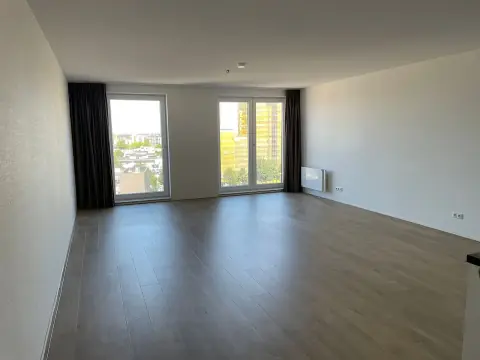
- “Unfurnished” often means no flooring, no curtains, sometimes no light fixtures. Budget a few hundred to a couple of thousand euros to make the home livable.
- Appliance responsibilities vary by contract (and by whether the item is yours or the landlord’s). Clarify in writing.
- Photos and check-in reports are cultural standard—treat them like insurance for your deposit.
- Address registration (BRP) is not optional; skip it and you risk issues with bank accounts, health insurance, and allowances.
Dispute Pathways at a Glance
- Rent too high for points? → Huurcommissie rent assessment (deadlines vary; new mid-market contracts have specific windows).
- Service costs incorrect/late? → Huurcommissie service-costs procedure, citing missing/incorrect annual statement.
- Illegal fees charged? → Demand refund (BW 7:417(4) / 7:264). Court if needed.
- Rent increase above cap? → Object in writing, then Huurcommissie (where applicable).
Key Takeaways
- Budget both up-front and monthly: deposit ≤ 2 months + first rent up front; recurring items include service costs, energy, internet, waste levy, and water-board taxes.
- Know your sector: Social and mid-market are regulated by the WWS; verify your point score and maximum rent before signing.
- Mind the 2025 caps: Social 5% (from 1 July), Mid-market 7.7%, Free sector 4.1%. Dispute anything higher.
- Demand transparency: Service costs must be itemized yearly and reflect actual expenses.
- Avoid illegal fees: Tenant “agency fees” and generic “contract/admin fees” are not allowed; reclaim if charged.
- Register (BRP) within 5 days if you’ll stay longer than 4 months—it unlocks other essentials.
- Energy matters: Energy label and heating type drive bills; district heating falls under ACM maximum tariffs.
Final Pro Tip: Before you apply, fill the tables with your real numbers (rent offer, your municipality’s waste levy, your water-board’s user charges, your internet quote). Doing this early can save hundreds and prevent surprises in month one.