Chapter 6 of 12Viewings and Bidding: Standing Out Without Overpaying
- 1How Renting Works in the Netherlands: Systems, Segments, and Key Terms
- 2Choosing Where to Live: Cities, Neighborhoods, and Commute Strategy
- 3Budgeting Your Move: Total Cost of Renting, Deposits, and Monthly Bills
- 4Finding Legit Listings: Portals, Agents, and Avoiding Scams
- 5Application Toolkit: Documents Dutch Landlords Expect and Income Rules
- 6Viewings and Bidding: Standing Out Without Overpaying
- 7Contracts and Law: Regulated vs Liberalised, Clauses, and Your Rights
- 8Registration, Permits, and Taxes: BRP, BSN, IND, and Municipal Charges
- 9Move-In & Utilities: Handover, Meter Readings, Energy Labels, Internet
- 10Living as a Tenant: Maintenance, Service Charges, Rent Increases & Huurcommissie
- 11Special Situations: House Sharing, Subletting, Short-Stay, Social Housing
- 12Ending the Tenancy: Notice, Check-Out, Deposit Returns, and Disputes
Table of Contents
Introduction
This chapter is your practical playbook for winning Dutch rental viewings and bidding smart—without paying more than the law allows. You’ll learn:
- How viewings work in the Netherlands, including group viewings and transparent selection.
- What documents signal seriousness (without giving away unnecessary personal data).
- How to read demand and decide when a higher bid is worth it.
- How to set a legal price ceiling using the Woningwaarderingsstelsel (WWS) points system.
- What changed in 2024–2025 (mid-rent regulation, fixed contracts, rent-increase caps).
- Your legal protections (deposit limits, no tenant brokerage fees, BRP registration, housing permits).
- Step-by-step guides to negotiate and challenge illegal pricing.
Misunderstanding these rules can cost you thousands in overbids, illegal “fees,” or deposits you struggle to recover. The good news: Dutch law is increasingly pro-tenant—if you use it.
What changed recently (and why you should care)
- Fixed contracts are again the norm. Since 1 July 2024, new residential tenancies are generally for an indefinite term. Temporary contracts are only allowed for specific groups (e.g., some student/urgent cases). That gives you more security and more leverage to negotiate non-price terms.
- Affordable Rent Act (Wet betaalbare huur). As of 1 January 2025, the WWS points determine a legally enforceable maximum rent for social and mid-rent homes (up to 186 points) and clarify the WOZ “cap.” Municipal enforcement started in 2025, with national roll-out from 1 July 2024. This is your most powerful anti-overpaying tool.
- Rent increases (2025). Maximum increases are 4.1% in the free sector, 7.7% in the mid-rent segment (from 1 Jan 2025), and 5.0% for social housing (from 1 July 2025). Anything above that is unlawful.
How Dutch viewings typically work
Viewings are often grouped, short (5–15 minutes), and application-driven: you submit a package, then the landlord/agent runs a transparent selection process (this transparency is a legal duty under the Wet goed verhuurderschap). Discrimination is expressly prohibited, and landlords must use objective, published criteria.
Before the viewing: prepare a “ready-to-rent” dossier
Bring or pre-upload (securely) the essentials most landlords request:
- ID (mask your BSN; a copy may be needed but unnecessary data should be shielded under Dutch privacy rules).
- Proof of income (recent payslips or employment letter). Many landlords use an income-to-rent ratio ~3x–4x as a market criterion, not a law. State it proactively if you meet it.
- Proof of study (if applicable).
- Residence/visa status (if applicable).
- References (previous landlord, employer).
- Timeline (flexible move-in dates help you win without overbidding).
Pro Tip: Put everything in one PDF with a one-page cover summary (“who I am, income, move-in date, pets/no pets”) so your application is faster to shortlist.
At the viewing: what to check in 10 minutes
- Energy label & draft WWS points (ask for the calculation or do it yourself later; see below). The label materially affects the legal max rent.
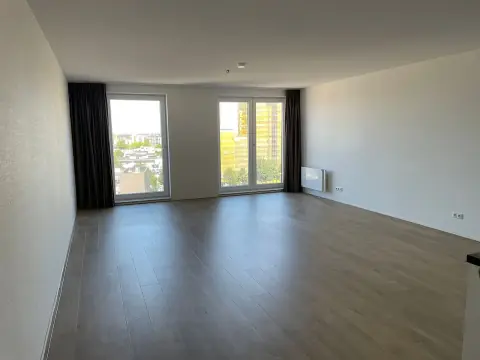
- Condition: In the Netherlands, unfurnished can mean no flooring, no curtains, no light fixtures. Ask what stays.
- Service-cost items: stairwell cleaning, lighting, gardening—are they reasonable and annually settled?
- BRP registration allowed at the address? (It must be; preventing registration is not allowed.)
- Housing permit requirement? In some cities and rent bands, you need a permit (e.g., Amsterdam mid-rent from 1 July 2025).
After the viewing: the smart follow-up
Send a short email the same day with your dossier, confirming:
- Desired start date (be flexible if you can).
- Any non-price preferences (e.g., minor painting you’ll do yourself).
- Request for the WWS calculation, energy label, and service-cost overview.
Reading demand: when to stand out and when to walk
Signals of high demand:
- 20+ people at a group viewing, fixed application deadline, agent says “multiple offers expected.”
- Listing mentions income screening, permit needed, or no pets (filters competition).
- Response speed: if you receive a same-day offer, demand is hot.
When to sweeten (non-price) terms:
- Offer a clean start date (e.g., “any time between the 1st–15th”).
- Accept minor works post-move-in (e.g., you’ll install flooring).
- Longer notice you’ll give before moving out (even in an indefinite contract, you can voluntarily offer courtesy notice > 1 month).
Pro Tip: Never transfer money before the contract is signed and you’ve verified landlord identity. See Scam Alert below.
Legal requirements that shape viewings and bids (2024–2025)
| Requirement / Rule | What it means for you | Source |
|---|---|---|
| Written tenancy & information duty | New tenancies must be in writing; landlords must provide key written info (rights, contact point, municipal complaint desk). | |
| Deposit cap | Max 2 months’ basic rent (kale huur). Landlord must provide a written breakdown to justify any deduction at end. | |
| No tenant brokerage fees | If an agent lists for the landlord, the tenant owes no “bemiddelingskosten” (also called admin/contract fees). | |
| Anti-discrimination & transparent selection | Landlords/brokers must use objective, published criteria and avoid any form of unjustified distinction. | |
| WWS points & rent ceiling (social + mid-rent) | From 1 Jan 2025: ≤ 186 points = regulated; max rent enforceable (WOZ share capped). Municipal enforcement. | |
| Fixed contracts are back | From 1 Jul 2024: indefinite contracts are the norm; temporary only in specified cases. | |
| BRP registration | If you stay > 4 months, you must register within 5 days of arrival (or 5 days after moving). | |
| 2025 rent-increase caps | 4.1% (free sector); 7.7% (mid-rent from 1 Jan); 5.0% (social from 1 Jul). |
Legal Tip: The Huurcommissie can assess the initial rent and service costs for regulated homes and mid-rent. If an offer seems above the legal maximum, you can accept and file a price review promptly to reduce it.
The points system (WWS): your price ceiling
The Woningwaarderingsstelsel assigns points for size (m²), energy performance (label), WOZ value (capped to max 33% of total points), and amenities/outdoor space. Points → maximum lawful rent. From 2025, the mid-rent band is roughly 144–186 points (with an indexed rent range), and ≥ 187 points is free sector; the WOZ cap calculation was clarified.
Quick self-check (5 steps)
- Measure living area (points ≈ 1 point per m² of rooms/areas counted as “vertrekken”).
- Find the energy label (ask landlord or check label docs). Better labels add more points.
- Check the WOZ value (from WOZ-waardeloket or landlord). Apply WOZ cap: max 33% of total points count can come from WOZ.
- Add amenities (private outdoor space, modern kitchen/bathroom, etc.).
- Convert points → max rent using the current index table (ask the landlord/agent for their WWS sheet; they’re expected to have it ready under the 2025 regime).
Pro Tip: If no valid energy label exists, point allocation may fall back to construction year, often resulting in fewer points—i.e., a lower legal rent ceiling.
Example (illustrative)
- 48 m² = ~48 pts
- Energy label B = + (label table)
- WOZ value → apply 33% cap rule across total points
- Amenities/outdoor = + (as applicable)
Sum the points; if you land ≤ 186, the home is regulated and the rent must not exceed the indexed max for that point score. Ask the agent to attach their WWS calculation to the offer—many do so by default in 2025.
Service costs: what’s reasonable?
“Servicekosten” must be cost-based and settled annually. Typical items include cleaning, common-area lighting, gardening, maybe small furnishings in common areas. If the breakdown looks vague or padded, you can request a detailed settlement and challenge it via the Huurcommissie for regulated/mid-rent homes.
Fees & deposits you should (and shouldn’t) pay
- Deposit (borg): max 2 months’ basic rent. Landlord must show deductions in writing when you leave.
- Bemiddelingskosten (broker fees): not payable by the tenant when the agent lists for the landlord—even if renamed “admin” or “contract fees.” If you paid, reclaim as undue payment.
- Key money (sleutelgeld): not allowed; reclaimable via court if charged.
Scam Alert: Never pay a viewing fee, “reservation deposit,” or several months’ rent before a signed contract and a verified landlord/agent. See national fraud guidance.
Housing permits (huisvestingsvergunning)
Some municipalities require a housing permit for social and, increasingly, mid-rent homes. From 1 July 2025, Amsterdam requires permits for mid-rent (typically 144–186 points). Rotterdam and others apply permits in designated areas or price bands—always check the listing or your gemeente website.
BRP registration: don’t skip it
If you live in the Netherlands for more than 4 months, you must register at the municipality (BRP) within 5 days of arrival or change of address. Proper registration is essential for health insurance, taxes, banking, and more. A landlord cannot forbid you to register.
How to craft a winning bid (without overpaying)
1) Decide your ceiling with the WWS
- Obtain or compute the point score (see steps above).
- If ≤ 186 points: your legal max is set. Bid at or below that.
- If 187+ points: consider market comps and non-price terms to win without a steep overbid.
Legal Tip: If the landlord refuses to share the WWS sheet for a potentially regulated home, note that municipalities and the Huurcommissie expect transparent pricing. You can still sign and later file for rent reduction if the points say so.
2) Signal seriousness better than your rivals
- Dossier: ID (with BSN masked), payslips, references, start date.
- Short cover letter (max 1 page) highlighting stability (contract type, employer, study).
- Flexibility: move-in window, minor DIY, or early key collection for meter readings.
- Availability: “I can sign as soon as the draft is ready” (but still read it carefully).
3) Negotiate non-price terms
- Start date: Offer earlier or later if that helps the landlord prevent vacancy.
- Small works: Offer to install flooring/curtains yourself (without offsetting rent unless agreed).
- Furnishing tweaks: Request appliances or lighting instead of higher rent.
4) If you must raise price, cap your exposure
- Raise €25–€50 steps; avoid big jumps.
- Ask for multi-year stability (e.g., “only statutory index” increases).
- For mid-rent or regulated homes, remember 2025 caps apply to increases—don’t overpay upfront; you can’t recover overbids easily unless the initial rent is above the legal max.
Reading listing quality (and spotting red flags)
- Transparent criteria published? ✔️ Good.
- WWS points attached? ✔️ Excellent.
- “Pay to view” or “reserve before viewing”? ❌ Walk away (common scam pattern).
- Agent asks you to pay brokerage/admin? ❌ Point to 7:417(4) BW rule (no tenant fees if they act for the landlord).
Scam Alert: Fake ads recycle photos from other listings, push for instant payments, or insist on crypto/foreign transfers. Verify company details, check reviews, and when in doubt, don’t pay.
Step-by-step: check your max rent with the WWS
-
Collect data: m² plan, energy label, WOZ value (from the municipality’s WOZ portal or landlord).
-
Assign points:
- Size ≈ 1 point per m² of living rooms/bedrooms.
- Energy label adds/subtracts points.
- WOZ contributes points but is capped at 33% of the total.
- Amenities/outdoor points as per policy book.
-
Sum points and find the max rent from the indexed table (ask agent for 2025 table or use official checkers).
-
Compare with the asking rent:
- If asking > max, you have leverage to negotiate down or accept and file for reduction.
Step-by-step: dispute an illegal rent (regulated/mid-rent)
- Sign the lease (if you still want the home).
- Within the statutory window, file at the Huurcommissie for initial rent assessment. Bring the WWS sheet, photos/measurements, energy label, and WOZ proof.
- Service costs: collect invoices and request the annual settlement; if inflated, file a separate service-cost case.
- Outcome: rent is reduced to the legal max from the correct date; overpayments are adjusted.
Costs & typical ranges (to budget smart)
- Deposit: 1–2 months (legal max is 2).
- Service costs (flats): commonly €20–€125/mo depending on building services; must be cost-based and settled annually.
- Broker/agency: €0 to the tenant when the agent acts for the landlord (even if called “admin” or “contract costs”).
- Rent increases (2025): free sector 4.1%, mid-rent 7.7%, social 5% (timings as above).
Sector cheat-sheet: social vs mid-rent vs free sector
| Feature | Social | Mid-rent | Free sector |
|---|---|---|---|
| Points | ≤ 143 | 144–186 | ≥ 187 |
| Initial rent bound | Yes (WWS) | Yes (WWS) | Not by WWS ceiling |
| 2025 annual cap | 5.0% (from 1 Jul) | 7.7% (from 1 Jan) | 4.1% (calendar year) |
| Huurcommissie | Yes | Yes | Limited (mainly disputes, not price ceiling) |
| Housing permit? | Often yes | City-dependent (e.g., Amsterdam from 1 Jul 2025) | Rare |
| Contract type | Indefinite (post-1 Jul 2024 norms) | Indefinite (post-1 Jul 2024 norms) | Indefinite (post-1 Jul 2024 norms) |
Sources: Huurcommissie & Rijksoverheid summaries on Wet betaalbare huur, rent caps 2025, Wet vaste huurcontracten, and Amsterdam permit rules.
Responsibilities: who fixes and pays for what?
| Item | Tenant | Landlord |
|---|---|---|
| Light bulbs, minor draught excluders, small garden tasks | ✅ | |
| Annual settlement of service costs (produce breakdown, refund excess) | ✅ | |
| Structural defects (leaks, serious damp, heating system replacement) | ✅ | |
| Normal wear & tear at end | Not deductible from deposit | |
| Damage beyond wear & tear | ✅ | |
| Provide WWS sheet / energy label on request (regulated/mid-rent) | ✅ | |
| Written contract & info pack (contact point, municipal complaint link) | ✅ |
Note: Service costs must be cost-based and settled annually; disputes can go to the Huurcommissie (regulated/mid-rent).
How to stand out ethically (and legally) at viewings
- Be early and brief. Dutch viewings are brisk; respect others’ time.
- Ask smart questions: energy label, WWS points, service-cost items, BRP, permit.
- Offer clarity, not cash: emphasize your start date, income stability, no pets (if true), and clean references.
- Avoid “side payments.” Extra “key money” is illegal.
Pro Tip: If you just miss out, ask the agent to keep your dossier for the next unit—agents often have multiple similar listings.
City & regional nuances to keep in mind
- Amsterdam: From 1 July 2025, mid-rent requires a housing permit; expect agents to pre-screen income.
- Rotterdam: Permits still apply in designated districts under local regulations—agents sometimes process it for you.
- Randstad (Amsterdam/Rotterdam/The Hague/Utrecht): Group viewings are common; non-price terms often decide winners.
- Shell condition is common in unfurnished homes (no flooring/fixtures). Budget time and cost.
Privacy and screening: your rights
Landlords may verify identity and income but should minimize data. Provide ID with BSN masked and only the last few digits if asked for verification; ask why a specific document is needed. You may be asked for payslips or an employment letter; this is customary, not statutory.
Legal Tip: Selection must be objective and non-discriminatory (e.g., first-come/lottery/specific income criteria). If you suspect discrimination, use the municipal complaint desk empowered under the Wet goed verhuurderschap.
Common mistakes (and how to avoid them)
-
Overbidding on a regulated home Fix: Do the WWS math. If ≤ 186 points, don’t bid over the legal max; or sign and file with Huurcommissie to reduce.
-
Paying “broker fees” as tenant Fix: Quote 7:417(4) BW; refuse admin/contract costs if the agent acts for the landlord.
-
Transferring deposit before signing Fix: Contract first, money after. Deposit ≤ 2 months by law.
-
Skipping BRP registration Fix: Register within 5 days; landlords cannot block it.
-
Ignoring housing-permit rules Fix: Check your gemeente. In Amsterdam, mid-rent needs a permit from 1 July 2025.
-
Accepting vague service costs Fix: Ask for itemized breakdown; challenge unreasonable charges.
Bidding templates you can adapt
If the home is likely regulated (≤ 186 points):
Dear [Agent/Landlord], Thank you for the viewing. Based on the WWS, I estimate approx. [X] points, so the maximum legal rent is €[Y]. I’d like to offer €[Y], with a [date range] start and a deposit of 1 month. Dossier attached (ID with BSN masked, payslips, references). Best regards, [Name]
If the home is 187+ points (free sector):
Dear [Agent/Landlord], Thanks for the viewing. I offer €[X] with statutory indexation only and a [start date]. Happy to handle minor cosmetic works (flooring/curtains). Dossier attached. Best, [Name]
Frequently asked “edge cases”
Q: Can my offer be “binding” before signing? A: Dutch lease contracts can, in principle, be formed by offer and acceptance, but under Wet goed verhuurderschap, a written contract is required for new tenancies and forms part of the compliance duties. Don’t transfer money until you have and approve the written contract.
Q: The agent says the rent can rise more than the cap because the contract allows it. A: Unenforceable. 2025 caps apply regardless of higher contractual clauses.
Q: The ad looks great but asks to pay to “unlock” viewing details. A: Red flag (common scam). Don’t pay; verify via official channels.
Your 10-minute pre-bid checklist
- WWS points estimated or provided
- Energy label seen
- WOZ value known
- Service-cost list requested
- BRP registration confirmed
- Housing permit needed? (city-specific)
- Deposit ≤ 2 months stated
- No tenant brokerage fees
- Rent-increase clause respects 2025 caps
- Dossier polished (ID masked, income proof, references)
Tables for quick reference
A) Legal limits & where they come from
| Topic | Limit/Rule | Where it comes from |
|---|---|---|
| Deposit | Max 2 months basic rent | Rijksoverheid (Wet goed verhuurderschap explainer) |
| Tenant brokerage fees | Not allowed when agent lists for landlord | Rijksoverheid / Civil Code 7:417(4) |
| Annual rent caps (2025) | 4.1% free, 7.7% mid, 5.0% social | Rijksoverheid / Huurcommissie |
| WWS scope (2025) | ≤ 186 points regulated (social+mid) | Huurcommissie (Affordable Rent) |
| WOZ “cap” | WOZ share ≤ 33% of total points | Gov. implementation notes / Huurcommissie policy |
| Contract form | Written tenancy & info pack required | Gov. explainer (Wgv) |
| Housing permits | City-specific (e.g., Amsterdam mid-rent from 1 Jul 2025) | Gemeente pages |
| BRP registration | Within 5 days of arrival/move | NetherlandsWorldwide / Gemeente guidance |
B) Responsibilities checklist (move-in to move-out)
| Phase | Tenant | Landlord |
|---|---|---|
| Offer & screening | Provide minimal necessary data (ID masked, income). | Publish objective, non-discriminatory criteria. |
| Contract | Read; don’t pay before signing. | Provide written contract + info pack; attach WWS for regulated/mid-rent. |
| During tenancy | Pay rent; report defects; reasonable minor maintenance. | Maintain structure/systems; settle service costs annually. |
| Rent increases | Check against legal caps. | Must follow statutory caps. |
| Move-out | Return in good condition; normal wear & tear ≠ damages. | Return deposit with written deductions (if any). |
C) Housing types vs bidding levers
| Segment | What wins | What to avoid |
|---|---|---|
| Social | Eligibility + complete dossier; non-price terms. | Overbidding above WWS max (pointless). |
| Mid-rent | WWS-aligned offer; clean start date; permit ready. | Ignoring permit/BRP rules. |
| Free sector | Non-price sweeteners; term stability; small works. | Agreeing to rent-increase clauses above 4.1% (2025). |
If something feels off: your escalation ladder
- Ask for clarity in writing (WWS sheet, service-cost list, selection criteria).
- Municipal complaint desk (Wet goed verhuurderschap enforcement).
- Huurcommissie (regulated/mid-rent): initial rent or service-cost disputes.
- Fraudehelpdesk/Police for scams (never pay to view/reserve).
- Legal aid/Juridisch Loket for tailored advice.
Cultural notes (to reduce friction)
- Direct and brief works. Dutch agents appreciate concise facts and punctuality.
- DIY readiness (flooring/curtains) is common and can help your case.
- Pets: disclose early; many buildings have rules.
- Permits & BRP: Dutch landlords expect tenants to know and comply—signal you’ve checked both.
Key Takeaways
- Use the WWS to set a hard ceiling: if the home is ≤ 186 points, the rent must align with the points (2025 rules).
- Don’t pay tenant brokerage/admin fees when the agent acts for the landlord; it’s not allowed.
- Deposit can’t exceed 2 months and must be fairly settled at the end.
- BRP registration is mandatory within 5 days; landlords can’t block it.
- From 1 Jul 2024, indefinite contracts are standard; negotiate non-price terms to win.
- 2025 caps: 4.1% (free), 7.7% (mid), 5.0% (social). Clauses above this are unenforceable.
- Amsterdam mid-rent requires a permit from 1 Jul 2025; check your city.
- If pressured to pay to view/reserve, it’s likely a scam—walk away.
Final note: Laws and municipal rules evolve. Always cross-check current points tables and local permit rules on your gemeente and the Huurcommissie/Rijksoverheid portals before you bid. The citations throughout this chapter link to the most recent official guidance available at the time of writing.