Chapter 9 of 12Move-In & Utilities: Handover, Meter Readings, Energy Labels, Internet
- 1How Renting Works in the Netherlands: Systems, Segments, and Key Terms
- 2Choosing Where to Live: Cities, Neighborhoods, and Commute Strategy
- 3Budgeting Your Move: Total Cost of Renting, Deposits, and Monthly Bills
- 4Finding Legit Listings: Portals, Agents, and Avoiding Scams
- 5Application Toolkit: Documents Dutch Landlords Expect and Income Rules
- 6Viewings and Bidding: Standing Out Without Overpaying
- 7Contracts and Law: Regulated vs Liberalised, Clauses, and Your Rights
- 8Registration, Permits, and Taxes: BRP, BSN, IND, and Municipal Charges
- 9Move-In & Utilities: Handover, Meter Readings, Energy Labels, Internet
- 10Living as a Tenant: Maintenance, Service Charges, Rent Increases & Huurcommissie
- 11Special Situations: House Sharing, Subletting, Short-Stay, Social Housing
- 12Ending the Tenancy: Notice, Check-Out, Deposit Returns, and Disputes
Table of Contents
Introduction
This chapter is your move-in playbook for the Netherlands. It covers the handover with your landlord or agent, how to record meter readings (electricity, gas, heat, and water), how to check and use the energy label of your home, and how to set up utilities and internet without stress or surprise costs. We mix legal must-knows with practical steps and local quirks so you can use this as a standalone reference—online or as a PDF/EPUB—on day one.
Why it matters:
- Incorrect handover notes or missing meter photos can lead to disputes and back-billed consumption months later. ACM’s consumer guidance is explicit: when you move, supply companies expect meter readings within 5 working days, so keep proof.
- Your landlord is legally obliged to provide a valid energy label to a new tenant; it affects running costs and even rent points in regulated housing.
- Dutch law now caps rental deposits at two months’ basic rent nationwide under the Wet goed verhuurderschap (Good Landlordship Act).
- Smoke detectors are mandatory on every inhabited floor—landlords must install them.
- Utilities and internet have consumer rights (cooling-off, switching, maximum heat tariffs) you can rely on.
What to Expect at Handover (Key Day)
The handover is your moment to freeze the condition of the home and the starting levels of all meters. Treat it like a mini-audit.
Step-by-Step Handover
-
Walkthrough & Defect List
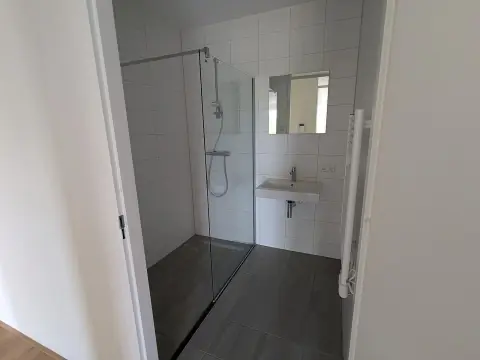
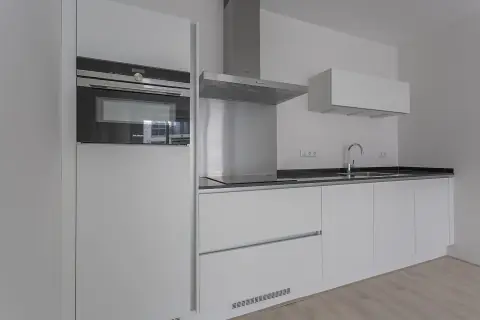
- Inspect walls, floors, windows, sanitary facilities, kitchen appliances, balcony/terrace, storage, and common areas.
- Note defects in a signed handover report (photos + brief description).
- Ask for manuals/warranty info for fixed appliances, boiler/heat interface unit (HIU), and ventilation.
-
Safety Check (2 minutes, big impact)
- Verify smoke detectors on each floor (press to test). Landlords must provide them.
- If present, check CO detector near a gas boiler.
- Identify the main water stopcock and electrical main switch.
-
Energy Label & Documents
- Ask for the energy label (A++++ to G). Landlords must make it available when you rent; you can independently verify the label in EP-Online, the official national database.
-
Meter Readings (with photos)
- Take clear, timestamped photos of electricity (kWh), gas (m³), heat (GJ) if on district heating, and water (m³).
- Co-sign the readings with the landlord/agent on the handover form.
- Submit the readings to your supplier within 5 working days of the move/contract start (or your supplier will estimate).
-
Keys & Access
- Count keys for front door, mailbox, bike storage, communal entrance, and meter rooms.
- Ask for access to online portals (smart thermostats, heat provider portal, VvE/building portal).
Pro Tip: Make a short video sweep of each room and every meter, then email it to yourself and the landlord to time-stamp it.
Setting Up Your Utilities (Electricity, Gas, Heat, Water)
Utilities in the Netherlands are straightforward once you know who does what:
- You choose the energy supplier (billing & tariffs).
- The grid operator (netbeheerder) owns/maintains the physical connection (you cannot choose them). Find yours and your 18-digit EAN connection code via Netbeheer Nederland or the public Eancodeboek.
- Water is a regional monopoly (e.g., Waternet Amsterdam region). You register with the local provider.
Electricity & Gas (if applicable)
What to do:
- Pick a supplier (fixed/variable/dynamic prices).
- Provide address, start date, meter/EAN codes, and move-in readings. If you have a smart meter that is set to share data automatically, readings are pulled for you (you can opt out).
- Expect a final bill at your old address and a new advance payment (voorschot) at the new one.
If you forget to sign up: The grid operator can flag uncontracted consumption and you risk disconnection or back billing—sign up promptly.
Changing connection capacity: Some homes have 1×35A or 3×25A electricity connections; upgrades/downgrades go via the grid operator (fees apply, lead times vary).
District Heating (Stadswarmte)
If your home is on a heat network, you don’t use gas for heating/hot water. You’ll have a heat meter (GJ) or allocators.
- Tariffs are capped annually by the ACM (the regulator). For 2025, ACM published the maximum fixed and variable heat charges; providers cannot exceed them.
- You’ll sign a contract with the local heat provider (e.g., Vattenfall Warmte, Eneco Warmte).
- Take a GJ meter photo on move-in.
Legal Tip: The ACM maximum heat tariffs change each year. If your invoice shows higher rates than the ACM maximums for that year, object in writing and refer to ACM’s published caps.
Water
- Water supply is not liberalised; register with your regional company (e.g., Waternet). Most allow online move notifications in Dutch or English.
- Tenants typically pay water board taxes known as waterschapsbelasting (the “inhabitants” component), billed per household. Examples for 2025 show per-household charges for tenants distinct from the owner’s charges.
Municipal Waste & Local Taxes
- Most municipalities charge afvalstoffenheffing (waste collection levy) to the occupant of the dwelling. Rates and rules are set per municipality in their annual verordening.
Internet & TV: Getting Online Without Delay
Connectivity varies by address:
- Fibre (glasvezel) via KPN Netwerk or other fibre operators.
- Cable (coax) via Ziggo.
- VDSL/ADSL copper (legacy).
- 5G/4G Home Internet as a temporary bridge.
Checklist:
- Address check on provider sites (availability differs per address).
- Order 2–3 weeks early (activation slots can be busy in student/expat peaks).
- If your provider can’t deliver at your new address, you can move your contract or—after the initial fixed term—cancel with 1-month notice.
- Internet/TV orders made online/phone are distance contracts—you usually have a 14-day cooling-off period.
Scam Alert: If someone at the door says they’re “from your provider” and wants you to switch on the spot, be cautious. You’re entitled to a 14-day cooling-off period for most distance sales; never sign or share IBAN under pressure. If in doubt, decline and contact your provider directly.
Meter Readings: How to Capture and Prove Them
Even with smart meters, your proof matters.
What to Record
- Electricity: kWh (note both day/night registers if visible).
- Gas: m³ (if the home has gas).
- District heat: GJ (or allocate readings if individual meters/allocators).
- Water: m³.
ACM guidance: on moving or switching, submit readings within 5 working days; check the final bill matches your readings.
Where to find technical IDs: Your supplier may ask for EAN codes (18 digits) that identify your connections. Look on prior bills or use the Eancodeboek. Netbeheer Nederland explains consumer basics and how to find your grid operator.
Pro Tip: Photograph the meter, then take a second photo with today’s newspaper or your phone’s lock screen date in frame. Email the set to yourself and the landlord.
Energy Labels: What They Mean and How to Use Them
What is an Energy Label?
An energy label (A++++ to G) shows how energy-efficient the home is. Owners must provide a label to a new tenant. You can look up labels in EP-Online, the national database maintained for RVO.
- Labels issued after 2021 follow the NTA 8800 method; older labels remain valid for up to 10 years (check the expiry on the label).
- In apartment buildings, label classes can differ per apartment based on orientation, insulation, and systems.
Why Tenants Should Care
- Running costs: better labels generally mean lower heating and electricity use.
- Rent points (WWS): In regulated sectors, energy performance adds points, which influence the maximum lawful rent. Use the Huurcommissie Huurprijscheck to estimate points based on address details.
Legal Tip: If your contract started after 1 July 2024, the Wet betaalbare huur changes how rent caps apply in a large part of the market. For contracts from 1 January 2025, Huurcommissie guidance shows new thresholds for social/middle/free sectors and associated point ranges. Always check the current Huurcommissie pages for your start date.
Legal Requirements in the Netherlands (Move-In Focus)
| Requirement / Topic | What it means for tenants | Where to verify |
|---|---|---|
| Energy label must be provided | Landlord must make a valid energy label available when renting out the home. | Rijksoverheid energielabel page; EP-Online database. |
| Deposit (borg) cap | Max 2 months’ basic rent nationwide under Wet goed verhuurderschap. | Rijksoverheid Q&A on Good Landlordship Act. |
| Smoke detectors | Mandatory on every inhabited floor; landlord must install them. | Rijksoverheid smoke detector guidance. |
| Register at the municipality (BRP) | Moving within NL or from abroad? Register address within 5 days (varies by situation). | RvIG / Government Digital Service for BRP. |
| Meter readings on move-in | Submit to supplier within 5 working days; keep photo proof. | ACM ConsuWijzer. |
| District heating caps | Heat providers cannot exceed ACM maximum tariffs for the year. | ACM official tariff notice; ConsuWijzer. |
| Service costs (nuts & services) | Only specific categories are allowed; disputes go to Huurcommissie (policy book updated 1 Jul 2025). | Huurcommissie service-costs pages and policy books. |
Note: Rent-cap thresholds/points depend on contract start date and later legislative updates. Always check current Huurcommissie guidance for your situation (e.g., thresholds per 1-1-2025).
Huurcommissie & Rent Reasonableness (Why it’s in a utilities chapter)
Move-in is the perfect moment to validate that your initial rent is lawful for the home’s points.
Quick path to check your rent
- Use the Huurprijscheck (Huurcommissie) to see the point score and the maximum permitted rent.
- If the result suggests your rent is too high, first ask your landlord in writing to correct it, attaching the Huurprijscheck outcome.
- If there’s no resolution, see the Huurcommissie page on rent reduction on points (process depends on your start date and sector under Wet betaalbare huur).
Legal Tip: Historically, tenants had limited time to challenge the initial rent. Under the new regime, what you can claim—and when—depends on your contract date. Always consult the current Huurcommissie pages for timelines and forms.
Service Costs & Utilities in Your Rent
“Servicekosten” are not an extra slush fund. The Huurcommissie maintains strict categories and an up-to-date policy book (service-costs disputes are common).
Examples of legitimate service costs (indicative): cleaning of common areas, caretaker costs, lighting in shared hallways, basic garden maintenance for shared spaces, water for commons, and metered utilities recharged at cost.
Pro Tip: Ask your landlord how utilities are billed (own meter vs. sub-meter vs. allocation) and request the annual specification early—this avoids surprises at year-end.
Tenant vs. Landlord Responsibilities (Maintenance Essentials)
Dutch law splits maintenance between tenant and landlord. Small, day-to-day repairs are on the tenant; structural and major repairs are on the landlord. This is codified in the Besluit kleine herstellingen (Decree on minor repairs).
Quick Checklist (Common Items)
| Item / Issue | Tenant (you) | Landlord |
|---|---|---|
| Replace lightbulbs, unclog reachable drains, tighten loose handles | ✅ Minor repairs per decree | — |
| Painting interior walls/patching small holes | ✅ Minor repairs | — |
| Boiler/HIU annual service | — | ✅ (landlord responsibility; may be via service contract) |
| Exterior painting, roof leaks, major damp, window frame rot | — | ✅ |
| Smoke detectors: installation | — | ✅ Must provide on each floor. |
| Smoke detector: battery replacement | ✅ Typically tenant | — |
Legal Tip: Costs that are landlord responsibilities under the Besluit kleine herstellingen cannot be pushed to you as “service costs.” If that happens, dispute it (Huurcommissie).
Utilities Setup Timeline (At a Glance)
| When | What to do | Notes |
|---|---|---|
| T-4 weeks | Internet availability check; order installation | Use fibre/cable/DSL postcode check; aim for early slot; consider 4G/5G temporary router. |
| T-2 weeks | Choose energy supplier; confirm start date | Have EAN codes ready for electricity/gas; if heat network: find heat provider. |
| T-1 week | Register with water provider | Water is regional; register online (e.g., Waternet has EN pages). |
| Key Day (T-0) | Handover inspection, meter photos, co-signed readings | Submit readings within 5 working days; keep copies. |
| Week 1–2 | Verify first advance invoices and contract details | Check tariff caps for district heating if applicable. |
| Month 1–2 | Check BRP registration confirmation | Register within 5 days of moving. |
Regional & Cultural Notes (Dutch Quirks That Surprise Newcomers)
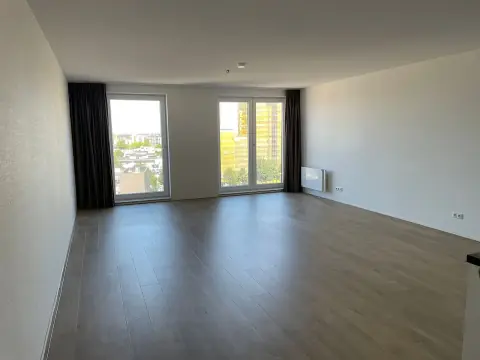
- “Unfurnished” (ongemeubileerd) often means really bare—sometimes no flooring and no light fixtures. Budget time and cash to install basics.
- District heating zones (stadswarmte) are common in new or dense urban areas; there’s no gas in many new builds.
- Waste systems vary by city: you might need an afvalpas (waste access card) to open underground bins.
- Bikes in common areas: buildings can be strict about storage; check your house rules (huishoudelijk reglement).
- Internet lead times spike in August–October (students) and January (job moves). Book early.
Internet Options: Compare at a Glance
| Connection | Typical Use | Pros | Cons |
|---|---|---|---|
| Fibre (FTTH) | Work from home, streaming, gaming | Symmetric speeds, low latency, future-proof | Not at every address; new installs may need access to utility cupboard |
| Cable (Coax) | Streaming, casual gaming | Wide coverage, high downstream speeds | Asymmetric; building coax quality varies |
| VDSL/ADSL | Basic browsing | Often available where fibre isn’t | Slower; distance-dependent |
| 5G/4G Home | Temporary bridge | Quick start, portable | Data limits/traffic management possible |
Pro Tip: If you ordered internet late, ask for a temporary 4G/5G router from your provider or rent one for the overlap.
How to Read Your Meters (Examples)
Electricity (Smart Meter)
- Look for registers like 1.8.1 (day) and 1.8.2 (night) if dual tariff; otherwise a single total.
- If you’ve disabled auto-read, you must report manually—your supplier tells you how.
Gas
- Record the whole numbers in m³. Older dials may have red decimals—ignore them.
District Heat
- Record GJ from the heat meter (often in the utility cupboard). Some apartments use radiator allocators; photograph each device if present.
Water
- Record the m³ figure; ignore leading zeros and small red decimals.
Pro Tip: Ask your landlord which meter rooms serve the flat (basement cabinets are common in larger blocks).
Example: Is My Rent Within the Legal Cap?
- Open the Huurprijscheck for zelfstandige woonruimte.
- Gather details from your contract and energy label (surface area, amenities, energy class, outdoor space).
- Enter data and note the maximum lawful basic rent.
- If your actual rent exceeds this maximum and (depending on your contract date) you are in a regulated segment, request a reduction in writing. If unresolved, follow the Huurcommissie procedure for your contract date and sector.
Legal Tip: Sector thresholds and rent caps changed with the Wet betaalbare huur starting 1 July 2024, with new thresholds noted for 2025. Check the Huurcommissie update for the latest amounts and point bands.
Money Matters You’ll See on Your First Bills
- Advance payment (voorschot): a monthly estimate; it will be reconciled in the annual statement.
- Energy tax & the “vermindering energiebelasting”: each electricity connection with a residential use function receives a fixed annual tax reduction on the bill (amount set yearly by government).
- Heat tariffs: if on district heating, check your invoice against the ACM maximums for that year.
- Municipal taxes: watch for waste collection (afvalstoffenheffing) and water board charges billed separately.
How to Dispute a Bill (Utilities/Service Costs)
- Compare your move-in photos and readings to the opening balances on the bill.
- Write to the supplier/landlord with evidence (photos, handover form).
- For service costs disputes, use the Huurcommissie process and their service-costs policy book for categories and required specifications.
- For district heating charges above ACM maximums, quote the ACM tariff page and request correction.
City-Specific Notes
- Amsterdam: Water provider Waternet (single desk for water supply and water board taxes in much of the region). Clear English pages for moves.
- Rotterdam/The Hague: Providers vary (Evides/Dunea); district heating networks are common.
- Eindhoven, Utrecht, Groningen: Fibre roll-outs are advanced; still check address by address.
Common Mistakes to Avoid
- No handover photos → weak position in disputes about damage or cleaning.
- Forgetting meter readings → estimated bills that don’t match reality (submit within 5 working days).
- Ignoring the energy label → surprises in energy use and missed chances to challenge rent points.
- Assuming water “happens automatically” → register yourself; it’s not bundled with energy.
- Overpaying heat → not checking the ACM annual maximum heat tariffs.
- Paying for landlord items as service costs → check against Besluit kleine herstellingen and Huurcommissie policy.
- Internet ordered too late → days without connectivity; order early or use 4G/5G as a bridge.
Move-In Utilities Toolkit (Printable)
- Handover report with photos (condition + meters).
- Energy label PDF (from landlord) + EP-Online check result.
- Supplier contracts (energy/heat/water/internet).
- BRP registration confirmation (appointment or online submission).
- Building rules (huishoudelijk reglement) for waste, bike storage, noise, deliveries.
- Emergency numbers: grid operator fault line (stroomstoring 0800-0900 nationwide) and heat provider outage line.
Tables You Can Use
A. Utilities Comparison & Setup
| Utility | Who do you choose? | How to set up | What to record on day 1 |
|---|---|---|---|
| Electricity | Supplier (you choose) | Contract with supplier; grid operator fixed | kWh photo(s); EAN code |
| Gas | Supplier (you choose) | Contract with supplier; grid operator fixed | m³ photo; EAN code |
| District heating | Heat provider (area-based) | Contract with heat company | GJ photo (or radiators) |
| Water | Regional monopoly | Register online (e.g., Waternet) | m³ photo |
| Internet/TV | Provider (address-dependent) | Order 2–3 weeks ahead | Modem delivery/activation slot |
B. Legal Limits & Deadlines (Essentials)
| Topic | Key rule |
|---|---|
| Deposit | Max 2 months’ basic rent (Wet goed verhuurderschap). |
| Energy label | Landlord must provide to tenant; verify in EP-Online. |
| Smoke detectors | Required on every inhabited floor; landlord installs. |
| Meter readings | Submit within 5 working days of move; keep photo proof. |
| District heat tariffs | Provider cannot exceed ACM maximums for the year. |
| BRP registration | Register your new address within 5 days. |
C. Tenant vs Landlord Responsibilities (Short List)
| Area | Tenant | Landlord |
|---|---|---|
| Minor repairs (bulbs, unclogging reachable drains, small wall fixes) | ✅ per Besluit kleine herstellingen | — |
| Major repairs (structure, exterior, serious leaks, rot) | — | ✅ |
| Heating system annual service | — | ✅ (landlord’s duty; may use service contract) |
Frequently Asked “What Ifs”
What if there’s no energy label? Ask the landlord in writing. Owners are obliged to provide a label for a home they rent out. You can also search in EP-Online; if absent, that’s a red flag.
What if internet can’t be installed for 3–4 weeks? Order a 4G/5G home-internet stopgap; many providers or third parties rent these. Ask your ISP whether they can ship a temporary dongle/router.
What if I’m on district heat and my bill seems high? Compare with ACM maximum tariffs for the year; if higher, dispute in writing.
What if my landlord charges “service costs” for structural repairs? Point to the Besluit kleine herstellingen and the Huurcommissie service-costs policy book—then file a case if needed.
Key Takeaways
- Document everything on handover: defects, all meters, keys—with photos and signatures.
- Don’t move in “off the grid”: sign up for energy/heat and register water; internet can take weeks—order early.
- Use the energy label: it predicts running costs and affects rent points in regulated sectors.
- Know your rights: deposit cap (2 months), smoke detectors by law, ACM heat caps, 5-day meter-reading rule, 14-day cooling-off for distance telecom sales.
- Service costs are not a blank cheque: check categories and dispute via Huurcommissie when necessary (policy books updated July 2025).
- Register your new address (BRP) within 5 days—it’s essential for taxes, healthcare, and mail.