
Search the glossary
Look up a term, abbreviation or contract phrase and get a plain-language explanation with Dutch and English wording.
Search termsLegal Terms bring connected Dutch housing concepts into one focused vocabulary. Before relying on Legal terms, distinguish official guidance from documents and legal limits. Use the collection to interpret listings, documents, costs, processes, or renter guidance without treating a short definition as personal advice. Open the exact term you encountered, compare easily confused concepts, and verify current legal, financial, municipal, or contractual consequences with the responsible authority or professional.
Search a Dutch rental term, abbreviation or contract phrase
Rental questions rarely stay inside one topic. Move sideways into contracts, costs, tenant rights, subsidies or property features to see how the terms connect.
The practical relevance of Legal terms becomes clearer when applications, related terms, and current rules are separated.
Look up a term, abbreviation or contract phrase and get a plain-language explanation with Dutch and English wording.
Search termsContracts, costs, tenant rights, subsidies, property features and the rest of the Dutch rental vocabulary, grouped by topic.
See all categoriesLonger guides that walk through applications, contracts, costs and moving, with the terminology used in context.
Read the guidesExplore the latest properties added to Luntero. Find new apartments, houses, and studios across the Netherlands — updated daily to help you discover your next home faster.
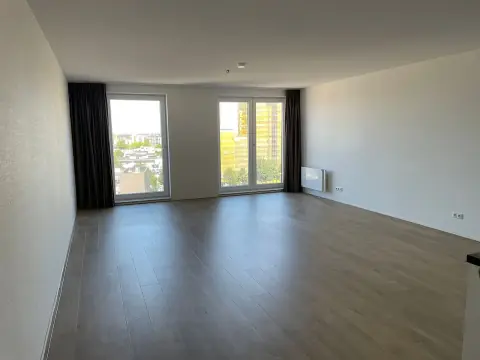
€1,159.00 / month

€600.00 / month
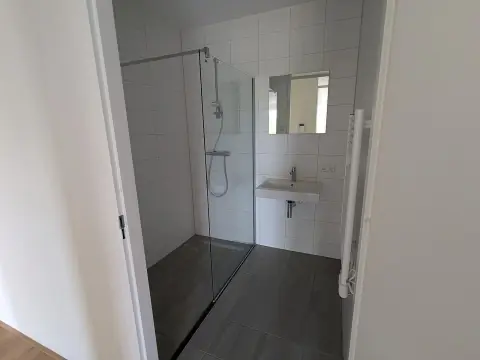
€932.00 / month
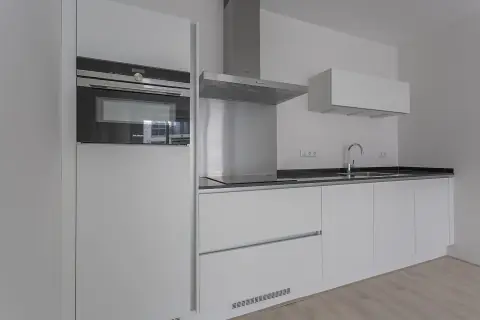
€1,187.00 / month
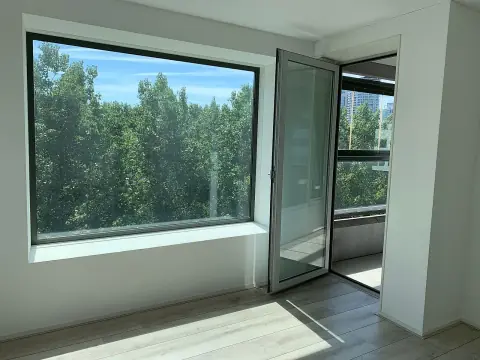
€1,845.00 / month
€933.00 / month
€1,899.00 / month
€765.00 / month
€714.00 / month

€1,596.00 / month
€714.00 / month

€1,210.00 / month
Showing 1–24 of 145 rental terms
The responsibility for dealing with pests, a contentious issue that depends on the cause of the infestation rather than the type of pest.
The process of extending a lease, a concept that works differently in the Netherlands compared to many other countries due to the nature of Dutch rental contracts.
A person who is not on the original lease but has the same legal rights and obligations as the main tenant, a status that is acquired, not automatically granted.
A contract clause stating the landlord does not occupy the property, which limits their liability for certain defects and signals you are renting from an investor.
An explanation of why commercial lease terms like 'net lease' or 'gross lease' are not used in the Dutch residential market, where a different system applies.
The crucial distinction between the official ownership registry (Kadaster) and the municipal residency registry (BRP), the latter being essential for every tenant.
Official municipal permits that can be required to legally occupy or rent out a property, creating a complex regulatory layer in many Dutch cities.
A critical legal distinction where landlords may use a 'licence' to circumvent the extensive protections offered by a standard lease agreement.
The act of a tenant remaining in a property after their contract ends, a situation with major legal consequences in the Netherlands, especially for temporary leases.
The complex and highly restricted ways a tenant can transfer their lease or sublet their property, which almost always require the landlord's explicit permission.
The common method for annually adjusting rent in the free sector, based on a national inflation figure that can be confusing and controversial.
The legal obligation for landlords and agents to handle tenants' personal data securely and transparently, as mandated by the GDPR.
The official legal bodies, primarily the Rent Tribunal and the courts, that provide binding solutions to disputes between tenants and landlords.
The annual change in rent, a process strictly regulated by the Dutch government with different rules for the social and free sectors.
A 'subordination agreement' is a highly technical legal document, irrelevant to residential tenants due to the powerful Dutch principle that 'sale does not break rent'.
A 'rider' is a US legal term for an addendum that adds specific clauses to a lease; in the Netherlands, it is part of the contract but cannot override mandatory tenant rights.
A 'side letter' is an informal agreement made alongside a lease, but it is a risky practice as its legal enforceability can be ambiguous.
A lease addendum ('addendum') is a document that adds new clauses or information to a rental agreement and is legally binding if agreed upon by both parties.
A lease amendment ('wijziging van de huurovereenkomst') is a formal, written agreement to change the terms of an existing lease, which requires the consent of both landlord and tenant.
A 'lease extension agreement' for a temporary Dutch lease does not create another temporary term but legally transforms it into a permanent, indefinite lease.
A 'renewal lease agreement' is not a standard Dutch concept; extending a fixed-term lease legally converts it into a secure, indefinite contract.
An 'option to renew' is a largely irrelevant concept for Dutch residential leases, as they either continue indefinitely by law or automatically convert to an indefinite status.
An 'option to purchase' clause in a lease ('koopoptie') is a non-standard and rare feature in Dutch residential rentals that must be legally reviewed before signing.
A lease option agreement ('huur met koopoptie') gives a tenant the right, but not the obligation, to purchase the property, making it a less risky alternative to a lease purchase.