
Search the glossary
Look up a term, abbreviation or contract phrase and get a plain-language explanation with Dutch and English wording.
Search termsHousing System Terms bring connected Dutch housing concepts into one focused vocabulary. Use Housing System terms to clarify official guidance, then check documents and legal limits wherever the term affects a real decision. Use the collection to interpret listings, documents, costs, processes, or renter guidance without treating a short definition as personal advice.
Search a Dutch rental term, abbreviation or contract phrase
Rental questions rarely stay inside one topic. Move sideways into contracts, costs, tenant rights, subsidies or property features to see how the terms connect.
Move from the literal wording of Housing System terms to applications, related terms, and current rules for practical meaning.
Look up a term, abbreviation or contract phrase and get a plain-language explanation with Dutch and English wording.
Search termsContracts, costs, tenant rights, subsidies, property features and the rest of the Dutch rental vocabulary, grouped by topic.
See all categoriesLonger guides that walk through applications, contracts, costs and moving, with the terminology used in context.
Read the guidesExplore the latest properties added to Luntero. Find new apartments, houses, and studios across the Netherlands — updated daily to help you discover your next home faster.
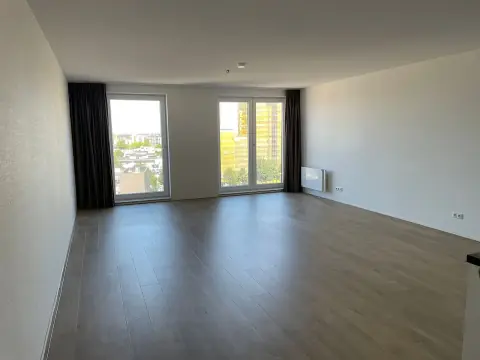
€1,159.00 / month

€600.00 / month
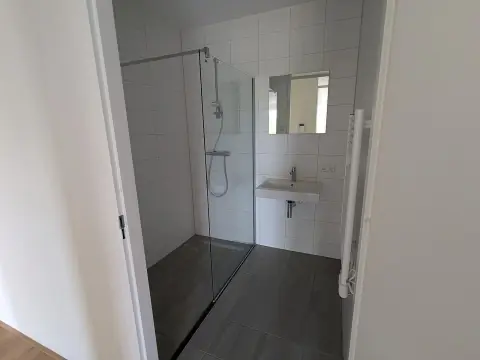
€932.00 / month
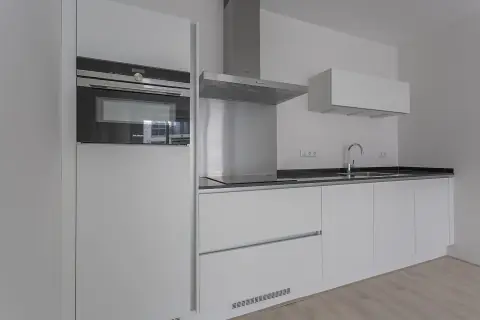
€1,187.00 / month
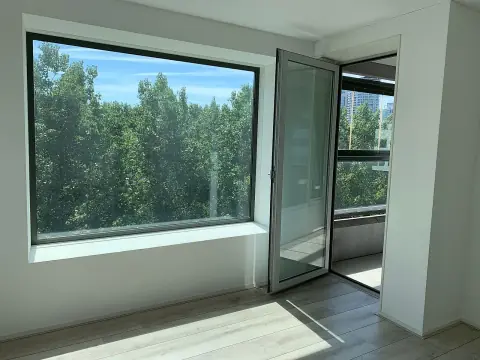
€1,845.00 / month
€933.00 / month
€1,899.00 / month
€765.00 / month
€714.00 / month

€1,596.00 / month
€714.00 / month
€1,210.00 / month
Showing 1–24 of 90 rental terms
A housing model where residents collectively own and manage their own properties, a niche sector in the Netherlands that receives some government support for its creation.
The indirect government financial support that allows non-profit housing corporations to build and maintain affordable social housing for low-income tenants.
An explanation of the limited support and specific housing projects ('middenhuur') aimed at middle-income earners who earn too much for social housing but not enough for the expensive free market.
The timeframe after which a rental application or a position on a waiting list is no longer considered valid, a key concept in the social housing system.
The common situation where a rental property receives far more applications from qualified candidates than can be accepted, driving the market's intense competition.
The specific basic rent price, set annually by the government, that determines whether a property falls into the protected regulated sector or the free market sector.
The official points-based system used in the regulated sector to determine the maximum legal rent for a property based on its quality, size, and location.
A 'housing innovation fund' is a high-level government or industry fund to support new construction technologies and policies, not a resource for individual tenants.
No 'allowance' exists for tenants to improve public areas; this is a municipal responsibility that residents can influence through formal requests and participation.
A 'seismic retrofit' is the technical term for the earthquake-proofing of buildings in Groningen, a subsidized process that is geographically unique and not applicable elsewhere.
This is a highly specific grant program exclusively for reinforcing homes against earthquakes in the Groningen gas extraction area and is irrelevant for the rest of the Netherlands.
This is a corporate or governmental term for funding landlords' digital systems; it is not a subsidy that tenants can apply for.
Flood resilience grants are not available to individual tenants; flood protection in the Netherlands is a massive national infrastructure project.
There is no single 'Community Housing Fund' in the Netherlands; the concept is fulfilled by the social investment activities of housing corporations and municipalities.
General mortgage assistance subsidies do not exist for renters; specific schemes like the National Mortgage Guarantee (NHG) are available only to homebuyers.
Mortgage interest relief is a major tax deduction for homeowners in the Netherlands and is completely irrelevant for tenants.
Capital gains relief on housing means that any profit made from selling your primary residence in the Netherlands is completely tax-free.
The mortgage interest deduction is a major tax benefit allowing homeowners in the Netherlands to deduct interest payments on their mortgage from their taxable income.
An income tax deduction for housing in the Netherlands is a major financial benefit almost exclusively available to homeowners through the mortgage interest deduction.
A loan guarantee scheme in the Dutch housing market primarily refers to the National Mortgage Guarantee (NHG), which insures banks against losses from mortgage defaults.
There is no direct 'BENG subsidy'; BENG is a mandatory energy performance standard for all new buildings, not a subsidized option.
A social impact housing bond is a financial tool used by institutions to fund affordable housing, operating entirely behind the scenes from a tenant's perspective.
Waste disposal is a municipal service paid for by the tenant, with the landlord's role limited to providing access to the system.
A housing space quota is a municipal regulation that limits the conversion of properties for specific uses, such as shared housing or tourism.