Chapter 1 of 12Introduction to Renting in the Netherlands
- 1Introduction to Renting in the Netherlands
- 2Understanding the Dutch Housing Market
- 3Types of Rental Properties in the Netherlands
- 4Essential Documents and Requirements
- 5Navigating Rental Platforms and Agents
- 6Rental Contracts and Tenant Rights
- 7Budgeting for Rent and Living Costs
- 8The Viewing and Application Process
- 9Moving In: Deposits, Utilities, and Registrations
- 10Living in a Rental Property: Maintenance and Responsibilities
- 11Ending a Tenancy and Moving Out
- 12Special Topics: Expats, Social Housing, and Short-Term Rentals
Table of Contents
Introduction
Welcome to The Ultimate Dutch Rental Handbook by Luntero. This opening chapter gives you a comprehensive, plain-English overview of how renting works in the Netherlands—whether you’re Dutch, an expat, a student, or relocating for work. You’ll learn the types of rental contracts, how rents are regulated (including the 2025 rules), what to expect with deposits, service costs, and annual increases, how to register at the municipality (BRP), and how to assert your rights with the Huurcommissie (Rent Tribunal). We’ll also cover regional quirks (hello, homes without flooring), typical costs, and step-by-step processes you’ll actually use.
Why this matters: misunderstanding Dutch rental rules can cost thousands—overpaying rent, losing a deposit, or missing legal deadlines that could have reduced your rent for years. The good news? Dutch law offers strong protections—especially since 1 July 2024–2025, when major reforms took effect. We cite official sources throughout so you can double-check any point and act with confidence.
Pro Tip (Luntero): Besides listings, Luntero publishes expert rental news, a glossary of Dutch rental terms, and practical explainers—so you can track changes like 2025 rent caps or the latest points-system thresholds.
How the Dutch Rental System Is Structured (2025)
The Netherlands distinguishes three main segments. Which one you fall into determines your rights and rent caps.
The three segments at a glance (2025)
- Social rent (regulated): homes up to 143 WWS points (woningwaarderingsstelsel). Starting rent is regulated by a maximum linked to the points system (from €900.07 per month in 2025).
- Middle rent (middenhuur): many new contracts from 1 July 2024 onward with 144–186 WWS points or starting rents (2025) above €900.07 and at or below €1,184.82. These are also regulated—the big reform of the Affordable Rent Act (Wet betaalbare huur).
- Free sector (geliberaliseerd): generally 187 points or more or a starting rent above €1,184.82 (2025). Annual increases are capped, but the rent itself is not set by WWS (except some transitional rules for older contracts discussed below).
Legal Tip: From 1 January 2025, landlords must attach a points calculation (WWS) to every new rental contract. That makes it easier to verify if your rent matches the legal maximum.
Table: Social vs Middle vs Free Sector (2025 snapshot)
| Segment | WWS points (indicative) | Typical 2025 starting-rent band | Price regulation? | Annual increase cap (2025) |
|---|---|---|---|---|
| Social | ≤ 143 | ≤ €900.07 | Yes (max rent by points) | 5% (with specific exceptions for very low rents and higher incomes) |
| Middle | 144–186 | €900.07 – €1,184.82 | Yes (max rent by points) | 7.7% |
| Free | ≥ 187 | > €1,184.82 | No max rent (but see caps on annual increase) | 4.1% |
| Sources: Huurcommissie & Ministry infographic for 2025 thresholds and caps. |
What’s New: 2024–2025 Reforms You Must Know
- Affordable Rent Act (Wet betaalbare huur, WBH): in force 1 July 2024; extended the points system to much of the mid-market. Many new contracts signed on or after this date are no longer “free sector” if the dwelling scores within 144–186 points—they’re regulated with a legal maximum rent.
- Fixed Contracts Act (Wet vaste huurcontracten): since 1 July 2024, open-ended contracts are the default again (temporary contracts are heavily restricted, with limited exceptions). This significantly improves tenant security.
- Good Landlordship Act (Wet goed verhuurderschap, Wgv): since 1 July 2023, standardizes good practices nationwide. Among other things, it caps deposits at 2 months’ basic rent, requires written contracts, bans discrimination, and empowers municipalities to fine abusive behavior.
- Mandatory points calculation with new contracts: from 1 January 2025 landlords must include the WWS tally.
- City permits for tenants: some cities now require a huisvestingsvergunning (occupancy permit) not only for social but also middle-rent homes (e.g., The Hague; Amsterdam from 1 July 2025). Check locally before signing.
Typical Market Prices (Q2 2025)
Private-sector asking rents vary by city and furnishing level. For new lets in Q2 2025:
| City | Avg €/m² per month (free sector) |
|---|---|
| Amsterdam | €27.91 |
| Utrecht | €21.60 |
| Rotterdam | €21.52 |
| Den Haag (The Hague) | €21.34 |
| Eindhoven | €18.38 |
National average €/m² reached €20.06; average total rent €1,830; listings received 57 responses on average—evidence of tight market conditions.
Pro Tip (Luntero): Use Luntero’s filters and market snapshots to benchmark a listing’s price against recent city averages before you view.
Contracts & Tenancy Types
1) Open-ended contracts (default since 1 July 2024)
Open-ended leases are again the norm. Landlords can end them only on specific legal grounds (e.g., urgent own use) and with due process. This protects stable occupancy.
2) Temporary contracts (exceptions only)
Post-1 July 2024, temporary contracts exist but are restricted to special cases set in law (e.g., campus contracts, care, large family homes, caretakers). If offered a temporary lease, ask which statutory exception applies. Otherwise, assume it should be open-ended.
3) Room rentals (kamers)
If you rent a room (shared facilities), rent and service-cost rules still apply; BRP registration is still obligatory.
Legal Requirements & Key Rules (2025)
Deposit (waarborgsom)
-
Maximum: 2 months’ basic rent for contracts dated 1 July 2023 or later.
-
Return deadlines:
- Within 14 days after end of tenancy if nothing is owed;
- Within 30 days if the landlord deducts for unpaid rent/service costs/damages/energy-performance fee (EPV).
-
Proof: Always insist on a damage inspection report at check-in and check-out, with photos.
Service costs (servicekosten)
- Must be cost-based (no profit). Examples: cleaning of common areas, stairwell lighting, caretaker costs. Gas/water/electricity are not “service costs” in law; they’re separate utilities unless supplied centrally and charged through as actuals. Landlords must give you a yearly statement showing items, totals per item, and your balance. Dispute or missing overview? Contact the Huurcommissie or your municipality.
Registration (BRP)
- You must register your address in the Basisregistratie Personen (BRP) at the municipality where you live. This is foundational for taxes, benefits (e.g., huurtoeslag), and health insurance. Landlords cannot forbid BRP registration. Register promptly (NL guidance typically says within 5 working days of moving).
Mediation/agency fees
- Double charging is prohibited: if the agent acts for the landlord, you don’t pay mediation fees. Some agents re-label fees (“administration/contract”), but the rule still applies.
Annual rent increases (2025)
- Social sector: max 5% (with specific rules for very low current rents—up to €25/month—and higher-income surcharges of €50–€100).
- Middle rent: max 7.7%.
- Free sector: max 4.1% (based on CPI/CAO formula for 2025).
Starting rent checks & deadlines
- Within 6 months of your contract start, any tenant can ask the Huurcommissie to assess whether the starting rent fits the WWS points. If the rent is too high, it’s reduced with retroactive effect from day one. Don’t miss this deadline.
Transitional rule (older contracts)
- For some pre-1 July 2024 contracts in dwellings with ≤ 143 points that were in the free sector, the WBH created transition rights to move toward the proper regulated maximum (landlords had a period to adjust; from 1 July 2025 tenants can escalate to the Huurcommissie if not lowered). Check your specific situation.
The Points System (WWS): How Your Maximum Rent Is Calculated
The woningwaarderingsstelsel (WWS) assigns points for size (m²), kitchen/bathroom quality, outside space, energy performance (label), location factors, and more. Your points total ⇒ legal maximum base rent. The Huurcommissie publishes updated price-per-points tables each year and offers a Rent Check tool (in English too).
Pro Tip: From 1 Jan 2025, every new contract must include the points tally. Compare it to the official Rent Check to verify the price. If the contract price is higher than the legal maximum, ask the landlord to correct it in writing—or file with the Huurcommissie within 6 months.
Example: sanity-checking your rent
- Run the Huurprijscheck (self-contained dwelling) and note your points.
- Find the max rent for that points total (2025 tables).
- Compare to your contract base rent (cold rent, excl. service costs). If your contract exceeds the max: ask for a reduction; if refused, file (see next section).
How to Dispute Your Rent with the Huurcommissie (Step-by-Step)
When to use:
- Your starting rent seems too high for the points;
- Annual increase seems above legal cap;
- Service-cost statement is missing or inflated;
- Middle/social homes over the WWS maximum.
Steps:
- Collect evidence. Contract, WWS tally (if provided), your own measurements/photos, energy label, WOZ value, utility/service cost bills, and correspondence.
- Ask the landlord in writing to correct the issue (rent down to legal max; proper service-cost settlement; correct annual increase). Keep proof of sending.
- Mind the 6-month clock for assessing starting rent (from contract start). For annual increases and service costs, different windows apply, but don’t wait.
- File online with the Huurcommissie (choose the right procedure: starting rent, rent decrease by points, service costs, or rent increase). Pay the fee (refundable if you win). Use the 2025 policy books and forms as guidance.
- Inspection/hearing. The Huurcommissie may inspect, review documents, and invite both parties.
- Binding decision. If the rent is too high, the Huurcommissie sets the correct rent retroactively from day one (for starting-rent cases). Both parties are bound unless one escalates to the district court.
Legal Tip: If the landlord refuses to provide a points tally for a new 2025 contract, flag that in your filing—supplying one is mandatory.
Furnished vs. Unfurnished: Decoding Dutch Jargon
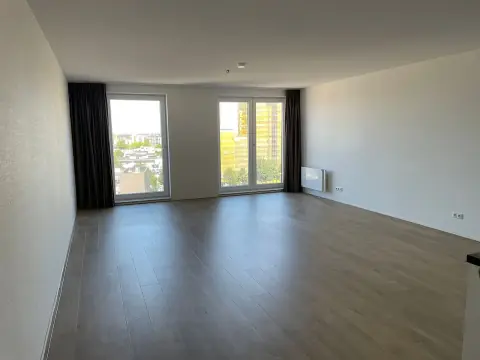
- Ongemeubileerd / kaal (unfurnished): can be very bare—often no flooring, curtains, or light fixtures. Budget for initial setup.
- Gestoffeerd (semi-furnished/upholstered): usually includes flooring and window coverings, sometimes lamps and basic appliances. You bring furniture.
- Gemeubileerd (furnished): ready to move in—furniture, major appliances, and often kitchen inventory. Always request an inventory list.
Pro Tip (Luntero): In listings, filter by kaal / gestoffeerd / gemeubileerd, then check photos + inventory. Ask the agent to confirm what stays in the contract.
City-Specific Permits & Rules
- Huisvestingsvergunning (occupancy permit): Several municipalities require this for regulated (and increasingly middle-rent) homes. The Hague already applies it; Amsterdam adds mid-rent permits from 1 July 2025. Without the permit, you cannot lawfully move in or register. Check your city website.
- Local rental permits for landlords: Some municipalities require landlords to hold a verhuurvergunning for certain areas or segments (tool enabled by the Good Landlordship Act). If your landlord lacks a required permit, report it to the municipal office.
Essential Money Matters
Table: Legal limits & timings you’ll use
| Topic | Core Rule (2025) | Where it comes from |
|---|---|---|
| Deposit | Max 2 months’ basic rent; refund 14 days (no deductions) or 30 days (with deductions). | Good Landlordship Act / Government step-by-step. |
| Starting rent check | File within 6 months of contract start; reduction applies retroactively if rent > WWS max. | Huurcommissie / WBH. |
| Annual increase – social | Max 5% (extra rules for very low rents and high incomes). | Ministry infographic 2025. |
| Annual increase – middle | Max 7.7%. | Ministry infographic 2025. |
| Annual increase – free | Max 4.1%. | Ministry infographic 2025. |
| Points tally attachment | Landlord must attach WWS tally to new contracts (from 1 Jan 2025). | Huurcommissie WBH page. |
| Service costs | Annual cost-based statement; dispute via Huurcommissie/municipality. | Government step-by-step; Huurcommissie. |
| BRP registration | Register at your municipality (obligatory, promptly after moving). | Juridisch Loket; municipal guidance. |
Who Pays for What? (Repairs & Maintenance)
Dutch law distinguishes minor repairs (tenant) vs. structural/major maintenance (landlord). The official “Besluit kleine herstellingen” lists tenant-paid items (e.g., changing light bulbs, unclogging minor blockages, garden upkeep). Anything beyond that—structural defects, outside paint, roof, central heating system failures—are landlord duties.
Table: Responsibilities Checklist
| Item/Issue | Tenant (Huurder) | Landlord (Verhuurder) |
|---|---|---|
| Replace light bulbs, fuses, batteries | ✅ | |
| Minor clogging of drains/siphons | ✅ | |
| Garden upkeep (weeding/mowing) | ✅ | |
| Paintwork & structural repairs | ✅ | |
| Central heating system servicing/defect | ✅ | |
| Serious damp/leaks & roof issues | ✅ | |
| Common-area cleaning (if agreed as service cost) | ✅ (via service costs) |
Use the official list for edge cases; if a landlord refuses major repairs, you can seek rent reduction for defects.
Service Costs: What’s Reasonable?
Allowable examples (cost-price only): common-area cleaning, stairwell lighting, caretaker/on-site manager, glass-insurance (if agreed), shared garden maintenance. Not service costs: private utilities you contract yourself (energy/water/internet), municipal taxes that are landlord’s responsibility unless agreed otherwise. Annual overview is mandatory; if it’s missing or inflated, you can dispute and reclaim.
Pro Tip (Luntero): Ask for last year’s service-cost statement before signing—great way to estimate monthly totals and spot surprises.
Huurtoeslag (Housing Benefit)
Depending on income and rent level (rekenhuur), you may qualify for huurtoeslag. Policy changes mean thresholds are updated each year. For 2025, the government indicated maximums around €900.07 for social dwellings, with continued rules for under-23s (lower caps). Always check the current Belastingdienst/Toeslagen calculator for your situation.
Cultural & Practical Realities
- Group viewings & speed: It’s normal to view with many others and apply immediately with a file (ID, contract, 3 recent payslips, employer statement, residence permit, sometimes 3x rent income rule).
- Unfurnished often ≠ “move-in ready”: Budget for flooring, curtains, lighting—and take measurements early.
- Permits & registration: In cities like The Hague and Amsterdam (from July 2025), you may need an occupancy permit for middle/social rent; don’t sign or move without checking.
- Landlord selection transparency: Wgv requires written selection criteria to reduce discrimination. If you suspect discrimination, report it to the municipal office or anti-discrimination services.
Regional Notes & Price Bands
While Amsterdam remains the priciest (circa €27.91/m²), Rotterdam, The Hague, and Utrecht hover around €21–€22/m², and Eindhoven around €18–€19/m² for new free-sector lets (Q2 2025). Smaller cities can be cheaper but vary widely quarter-to-quarter. Always benchmark a listing’s €/m² against local data.
Step-by-Step: Renting Your First Home in NL
- Define your segment & budget. Based on income, decide if you’re targeting social, middle, or free sector. Use Luntero to filter and compare €/m².
- Prepare your dossier. ID/passport, residence permit, BSN (or intent to register), job contract/offer, 3 payslips, employer letter/reference, and if self-employed, recent tax returns.
- Check permits. For The Hague/other cities (and Amsterdam middle rent from July 2025), confirm if you need an occupancy permit.
- View smart. Confirm furnishing level and what stays. Ask for last year’s service-cost statement and points tally (mandatory for new contracts in 2025).
- Run the WWS rent check. Compare points vs. contract rent before you sign.
- Contract review. Ensure open-ended unless a lawful exception applies; confirm deposit (≤ 2 months); check annual increase clauses comply with caps; ensure BRP registration is allowed.
- Inventory & inspection. Do a check-in report with photos; record meter readings; list keys.
- After move-in. Register with BRP promptly; set up utilities; store all invoices for service-cost settlement.
- Within 6 months: If needed, file starting-rent assessment. Don’t miss the deadline.
Scam Alerts, Legal Tips & Insider Advice
Scam Alert: • No viewing, no payment. Never pay deposit/first rent before seeing the property and verifying ownership/management. • “No registration allowed.” Walk away—you must register at your true address. • Weird payment methods. Avoid cash, crypto, gift cards, or foreign accounts without clear reason. • Double agency fees. If the agent represents the landlord, you don’t pay mediation fees. • Sleutelgeld (“key money”). Illegal; report to the municipality.
Legal Tip: • Keep everything in writing. Wgv requires written contracts and information; if your landlord refuses, report it—municipalities can fine non-compliance. • For middle/social homes, annual increases are capped; verify any proposal against the 2025 limits.
Pro Tip (Luntero): • Use Luntero’s glossary (e.g., WWS, BRP, EPV, WOZ) and news feed to keep up with reforms. • Save a PDF of this chapter and keep it with your rental dossier.
Real-World Examples
Example A: Starting rent too high (middle rent). A 50 m² apartment with an A-label, decent kitchen/bathroom, and balcony scores ~160 points. The legal max (2025 table) corresponds to a rent ceiling under €1,184.82. The landlord asks €1,325. Within 6 months, the tenant files with the Huurcommissie and wins a reduction backdated to day one.
Example B: Free-sector annual increase. Your free-sector lease proposes CPI + 3%. In 2025, the statutory cap is 4.1% total; any higher clause is unenforceable this year. You cite the Ministry’s 2025 infographic and ask to amend. If refused, file.
Example C: Deposit withheld. The landlord delays refund for weeks without an itemized deduction. You remind them: 14 days if no deduction; 30 days if deducting (limited to rent arrears, service-cost balancing, damage, EPV). You escalate to the municipal reporting office under Wgv if needed.
Differences by Housing Type
| Type | Typical features | Notes |
|---|---|---|
| Studio/Apartment | Common in cities; often part of VvE (HOA) with service costs. | Check elevator maintenance and common-area costs in annual statement. |
| Eengezinswoning (family house) | Often higher WWS points (space/outdoor). | Larger homes push points higher; verify cap before signing. |
| Room (kamer) | Shared facilities; lower WWS caps. | BRP registration still required; service costs scrutinized. |
| Short-stay/expat housing | Often furnished; premium €/m². | Ensure lawful basis (no tourist-rental disguises); check city rules. |
Common Mistakes (and How to Avoid Them)
- Missing the 6-month window to contest starting rent. Set a calendar reminder on day 1.
- Ignoring “kaal.” Budget time and money for flooring/curtains/lamps. Factor this into total cost of living.
- Accepting over-the-cap annual increases because “it’s in the contract.” The legal cap prevails each year.
- Not insisting on a written WWS tally (new 2025 contracts). Ask for it upfront.
- Paying illegal fees (double mediation, sleutelgeld). Politely decline; cite Wgv; report if pressured.
- Skipping BRP registration to “keep things simple.” This can nuke your benefits eligibility and is not optional.
Frequently Asked “Is This Normal?” Questions
Q: The landlord says “no registration.” A: That’s a red flag. Everyone must register at their actual address. You risk fines/benefit loss otherwise.
Q: The agent wants me to pay their “administration fee.” A: If the agent works for the landlord, you don’t pay mediation/duplication fees. Challenge it.
Q: My new Amsterdam middle-rent home requires a permit? A: From 1 July 2025, Amsterdam requires a huisvestingsvergunning for middle-rent. Apply before move-in; without it you cannot legally occupy/register.
Q: How do I check if my rent fits the home quality? A: Use the Huurcommissie Rent Check and compare with the contract WWS tally (required from 2025).
Quick Comparison: Typical Monthly Costs (Illustrative)
| Item | Amsterdam (free-sector, 50 m²) | Rotterdam (free-sector, 50 m²) |
|---|---|---|
| Base rent (€/m² × 50) | ~€27.91 × 50 ≈ €1,395 | ~€21.52 × 50 ≈ €1,076 |
| Service costs (common areas) | €40–€100 | €30–€80 |
| Utilities (single/couple, non-electric heat) | €120–€200 | €110–€180 |
| Internet | €35–€55 | €35–€55 |
Benchmark base rents from Q2 2025 Pararius figures. Actual service/utility costs vary by building and energy prices; always ask for last year’s statements.
What to Check Before You Sign (Printable Checklist)
- City requires occupancy permit (huisvestingsvergunning)? If yes, am I eligible and ready to apply?
- WWS tally attached to the contract (2025 new contracts). If not, request it.
- Deposit ≤ 2 months basic rent; refund terms (14/30 days) spelled out.
- Annual increase clause compatible with the 2025 caps (5% / 7.7% / 4.1%).
- Service-cost overview from last year or cost estimates itemized.
- Inventory list (if furnished/gestoffeerd) and check-in report with photos.
- “No registration” clause present? Walk away. BRP is mandatory.
- Copies of ID, payslips, contract, residence permit ready; employer statement prepared.
Where to Get Help
- Huurcommissie (Rent Tribunal): rent caps, service costs, increases, points system; binding decisions in most cases.
- Municipal reporting office: report Wgv violations (illegal fees, no written info, intimidation, discrimination). Available nationwide since 1 Jan 2024.
- Government.nl (Rijksoverheid): plain-language explanations and brochures (NL/EN) about Wgv, deposits, service costs, and tenant steps.
- Belastingdienst/Toeslagen: huurtoeslag eligibility and applications.
- Luntero: curated news updates, glossary, and market insights plus thousands of listings across the Netherlands.
Closing Summary: Key Takeaways
- Know your segment. In 2025, social (≤ 143 points) and middle (144–186 points) are legally capped by the WWS. Free sector remains uncapped on starting rent—but annual increases are capped.
- Act fast on price. If your starting rent seems above the legal maximum, file with the Huurcommissie within 6 months—reductions apply retroactively.
- Deposits & costs are regulated. Deposit ≤ 2 months; service costs must be actuals with a yearly statement; double agency fees are illegal.
- Register (BRP). It’s mandatory and essential for benefits and legality. Avoid any listing that says “no registration.”
- City permits may apply. Some municipalities (e.g., The Hague, Amsterdam from July 2025) require a huisvestingsvergunning for middle/social rent. Check before signing.
- Use the tools. Huurcommissie Rent Check, official 2025 tables, and Luntero’s market data keep you on the right side of the rules—and the price.