The timeframe after which a rental application or a position on a waiting list is no longer considered valid, a key concept in the social housing system.
Parkeervergunning
A parking permit, or parkeervergunning, is a municipal license allowing residents to park on the street in their neighborhood, often subject to impossibly long waiting lists.
Terms from the same part of the rental process, so you can read them together instead of looking each one up separately.
The timeframe after which a rental application or a position on a waiting list is no longer considered valid, a key concept in the social housing system.
There is no direct 'BENG subsidy'; BENG is a mandatory energy performance standard for all new buildings, not a subsidized option.
The 'Bouwbesluit 2012' is the national building code of the Netherlands, setting the minimum legal standards for safety, health, and usability that all rental properties must meet.
Capital gains relief on housing means that any profit made from selling your primary residence in the Netherlands is completely tax-free.
There is no single 'Community Housing Fund' in the Netherlands; the concept is fulfilled by the social investment activities of housing corporations and municipalities.
A housing model where residents collectively own and manage their own properties, a niche sector in the Netherlands that receives some government support for its creation.
The Parking Permit (Parkeervergunning) entry explains general usage; exceptions, Dutch context, and advice determine how far that explanation applies.
Every glossary entry that belongs to Dutch Housing System, collected on one page.
See TermsLook up a term, abbreviation or contract phrase and get a plain-language explanation with Dutch and English wording.
Search termsLonger guides that walk through applications, contracts, costs and moving, with the terminology used in context.
Read the guidesExplore the latest properties added to Luntero. Find new apartments, houses, and studios across the Netherlands — updated daily to help you discover your next home faster.
Luntero brings represented apartments, rooms, studios and houses from Dutch rental sources into one searchable place. Use the available filters to narrow your options, then check the original listing for current availability, price, conditions and application steps.
Browse rental listings collected from Funda, Pararius, Kamernet and other supported sources in one place. Coverage is broad but not exhaustive, and the original listing remains authoritative.
Navigate our clean and straightforward design effortlessly on both desktop and mobile devices for a seamless apartment, house, or room hunting experience in the Netherlands.
Browse rental listings in English, Dutch, Spanish, French, German, and more. Luntero ensures you can find your next home in the Netherlands in the language you're most comfortable with.
Luntero refreshes collected listings regularly and search alerts email new matches after a successful check. A source can change between refreshes, so verify decisive details there.
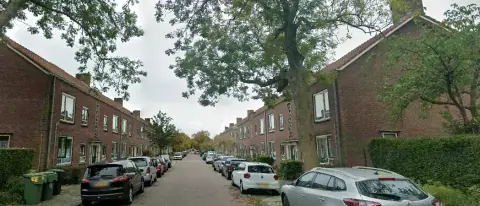
For tenants with a car, the words "parking permit available" in a rental listing can seem like a major victory. In reality, it's often a misleading statement that borders on fiction. A parking permit (parkeervergunning) in the Netherlands is not something a landlord can give you; it is a license issued by the municipality (gemeente) that is tied to a specific address and allows a resident to park on the street in their designated permit zone. The system is designed to manage the chronic lack of on-street parking in dense urban areas. While in theory this ensures residents get priority, in practice it has morphed into a bureaucratic nightmare, particularly in the most popular cities. The critical piece of information that is often omitted is that securing a permit is not a simple application process—it's a waiting game, and in cities like Amsterdam, The Hague, or Utrecht, that wait can be longer than any rental contract you'll ever sign.
The process involves registering your address with the municipality and then applying for a permit for your vehicle. The municipality will then place you on a waiting list for your specific neighborhood. The length of this list is the brutal reality check for any aspiring driver. In central districts of Amsterdam, for example, the waiting time for a parking permit can easily exceed five to ten years. This is not an exaggeration. You can check the estimated waiting times on your city's official website, and you should treat this information not as a worst-case scenario, but as the likely reality. Therefore, a landlord advertising a property as being in a 'permit zone' is stating a neutral fact, not offering a benefit. It's like advertising a house as being 'on planet Earth'. It's true, but it doesn't mean you'll be able to enjoy the amenities you associate with it.
Even if you are fortunate enough to live in an area with a shorter waiting list, a parking permit is not free. It's a recurring expense that can be surprisingly high, often several hundred euros per year, paid quarterly or annually. The cost varies dramatically depending on the city and the specific zone's parking pressure. This fee does not guarantee you a parking spot; it merely gives you the right to hunt for one within your designated zone. On days with street cleaning, local events, or simply high demand, you may still find yourself circling for an hour before parking half a kilometer from your front door. It's a license to participate in a daily competition for a scarce resource.
Many municipalities also offer a visitor parking arrangement (bezoekersvergunning), which allows you to register your guests' license plates online for a significantly reduced hourly parking rate. This is a useful, and often essential, perk, but it too is subject to annual caps on the number of hours you can use. For those who cannot or will not endure the waiting lists, the only viable alternative is to rent a private parking spot in a garage or on private property. These are, of course, far more expensive, often costing between €150 to €500 per month in a major city. This cost is entirely separate from your apartment's rent. The unvarnished advice for anyone moving to a major Dutch city with a car is to make the parking situation a primary filter in your housing search. Research the exact waiting list for a specific street address before you even view a property. Assuming you'll be able to park your car anywhere near your new home is one of the most common and costly mistakes a new renter can make.
The trend across all major Dutch cities is to make urban car ownership more difficult and expensive, not less. Municipalities are actively reducing the number of on-street parking spaces to make way for more green spaces, bicycle lanes, and wider sidewalks. As the number of available spots decreases, the number of permits issued is also reduced, and waiting lists grow ever longer. Some new-build apartment complexes are even constructed with the explicit municipal condition that their residents will be ineligible to apply for on-street parking permits at all, forcing them to rely on limited and expensive private garage spots or to forego car ownership entirely.
This policy direction means that relying on a street permit for long-term planning is an increasingly risky strategy. The rules can change, prices can and will go up, and the waiting lists are unlikely to shrink. A parking permit should be viewed as a temporary and precarious privilege, not a permanent right tied to your home. This reality is often at odds with the car-centric lifestyle many expats are used to, making it a significant and often overlooked factor when calculating the true cost and convenience of living in the heart of a Dutch city.

€1,159.00 / month

€600.00 / month

€932.00 / month

€1,187.00 / month

€1,845.00 / month

€933.00 / month

€1,899.00 / month

€765.00 / month

€714.00 / month

€1,596.00 / month

€714.00 / month

€1,210.00 / month