The legal standards for accessibility in residential buildings, which are primarily enforced for new constructions and major renovations.
Onderhoud van nooduitgangen
Emergency exit maintenance involves ensuring all designated escape routes are safe, unobstructed, and clearly marked.
Terms from the same part of the rental process, so you can read them together instead of looking each one up separately.
The legal standards for accessibility in residential buildings, which are primarily enforced for new constructions and major renovations.
Balcony safety compliance refers to the legal requirement for balconies and railings to meet specific structural and safety standards.
No subsidy exists for basement waterproofing; a damp or leaking basement is a maintenance defect that the landlord is legally required to fix at their own cost.
The essential regular servicing of the central heating boiler, a legal responsibility of the landlord to ensure safety and efficiency.
Building code compliance is the landlord's duty to provide a property that meets the national technical standards for safety, health, and usability set out in the 'Bouwbesluit'.
An insurance policy that covers the physical structure of the property, which is the landlord's responsibility.
The Emergency Exit Maintenance entry explains general usage; exceptions, case context, and eligibility determine how far that explanation applies.
Every glossary entry that belongs to Landlord Obligations, collected on one page.
See TermsLook up a term, abbreviation or contract phrase and get a plain-language explanation with Dutch and English wording.
Search termsLonger guides that walk through applications, contracts, costs and moving, with the terminology used in context.
Read the guidesExplore the latest properties added to Luntero. Find new apartments, houses, and studios across the Netherlands — updated daily to help you discover your next home faster.
Luntero brings represented apartments, rooms, studios and houses from Dutch rental sources into one searchable place. Use the available filters to narrow your options, then check the original listing for current availability, price, conditions and application steps.
Browse rental listings collected from Funda, Pararius, Kamernet and other supported sources in one place. Coverage is broad but not exhaustive, and the original listing remains authoritative.
Navigate our clean and straightforward design effortlessly on both desktop and mobile devices for a seamless apartment, house, or room hunting experience in the Netherlands.
Browse rental listings in English, Dutch, Spanish, French, German, and more. Luntero ensures you can find your next home in the Netherlands in the language you're most comfortable with.
Luntero refreshes collected listings regularly and search alerts email new matches after a successful check. A source can change between refreshes, so verify decisive details there.
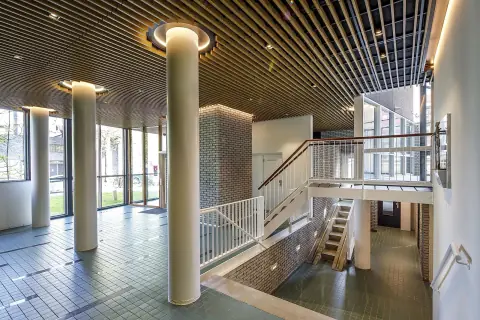
The maintenance and safety of emergency exits and escape routes (vluchtroutes) in a residential building is a grave and non-transferable responsibility of the property owner, which is either the landlord or the building's Vereniging van Eigenaars (VvE). This is not just a matter of good practice; it is strictly regulated under the Dutch Bouwbesluit (Building Decree) and enforced by the local fire department (brandweer) and municipal inspectors. The core of this obligation is to ensure that in the event of a fire or other emergency, all residents can evacuate the building quickly and safely. This legal duty encompasses several key areas. First, the escape routes themselves—which include hallways, stairwells, and final exit doors—must be kept structurally sound and in good repair. Second, they must be equipped with proper emergency lighting that automatically activates during a power failure, ensuring visibility. Third, all emergency exit doors must be easily openable from the inside without the need for a key. Finally, the routes must be clearly indicated with standardized pictogram signage. A landlord who fails to meet these requirements is not only breaching the rental agreement but is also creating a situation of extreme negligence that could have fatal consequences, and for which they would be held legally liable.
Despite the clear legal framework, the single most common and dangerous issue with emergency exits in Dutch apartment buildings is obstruction. Communal hallways and stairwells are frequently cluttered with personal belongings. Bicycles, strollers, shoe racks, old furniture, and bags of trash are often left in these shared spaces, transforming a life-saving escape route into a hazardous obstacle course. In a fire, these items not only physically block the path but also add fuel to the fire and can release toxic smoke. The responsibility to keep these routes clear rests with the landlord or VvE. They must establish and, more importantly, enforce clear building rules (huisregels) that prohibit the storage of any items in communal escape routes. However, this is where theory often collides with a less-than-ideal reality. Many landlords are reluctant to police their tenants and enforce these rules, preferring to avoid conflict. They may turn a blind eye to violations until a formal complaint is lodged or an official inspection is imminent. This passive approach puts all residents at risk. As a tenant, it is crucial to understand that even if your neighbors are the ones causing the obstruction, it is still the landlord's job to intervene and resolve the situation. You should never hesitate to formally report such obstructions, as you are not just complaining about clutter; you are reporting a serious safety violation.
Upon moving into an apartment building, and periodically thereafter, tenants should proactively audit their building's escape routes. Start from your own front door and walk the entire path to the final exit on the ground floor. Is the path wide enough and completely clear of any objects? Check the condition of the stair treads and handrails. Look for the illuminated green emergency exit signs and check if they are functional. Open the final exit door to ensure it operates smoothly and is not, for instance, illegally deadbolted. If your building has fire doors (heavy doors designed to stop the spread of smoke and fire), check that they are not propped open—a common but extremely dangerous practice. If you discover any issues, from obstructions to broken emergency lighting, document them immediately with photos and send a formal written complaint to your landlord or VvE. If they fail to take swift and effective action, you should not hesitate to report the situation directly to your local fire department (brandweer). They take such reports very seriously and can conduct an unannounced inspection. Forcing a landlord to clear a hallway might make you unpopular with the neighbor who owns the offending bicycle, but it is an essential action to ensure the safety of yourself, your family, and everyone else in the building.

€1,159.00 / month

€600.00 / month

€932.00 / month

€1,187.00 / month

€1,845.00 / month

€933.00 / month

€1,899.00 / month

€765.00 / month

€714.00 / month

€1,596.00 / month

€714.00 / month

€1,210.00 / month