
Administration Costs
A fee charged for administrative actions, which is almost always illegal when levied on a tenant by a landlord's agent.

Huurprijsaanpassingsprocedure
Dutch landlords can adjust rent annually based on set percentages, while tenants in the regulated sector can also petition to have their rent lowered if it exceeds the legal maximum.
In the Netherlands, rent is not static. The law provides formal procedures for it to be adjusted, creating a dynamic that works in two directions: the landlord's annual increase and the tenant's potential reduction request. These procedures are strictly regulated to balance the landlord's need to keep up with inflation and the tenant's need for predictable and fair housing costs. How this plays out depends entirely on whether you are in the liberalized (vrije sector) or regulated (sociale huur) sector of the market.
Once per year, landlords are entitled to propose a rent increase. The rules for this increase differ significantly:
Vrije Sector): In the free market, the allowable rent increase is determined by the rental agreement itself. Typically, this is tied to the Consumer Price Index (CPI) plus a small, fixed margin (e.g., CPI + 1%). A law currently caps this increase to prevent exorbitant hikes, but the contract is the primary guide.Sociale Huur): Here, the government sets a strict maximum percentage for the annual increase. This percentage can be income-dependent, allowing landlords to increase the rent more for tenants with higher incomes. This is intended to encourage high-earners to move out of subsidized housing.In both cases, the landlord must propose the increase in writing at least two months before it is due to take effect (usually on July 1st). The proposal must clearly state the old rent, the new rent, the percentage increase, and the date it applies. If the tenant believes the proposal is incorrect or unlawful, they can object.
While landlords can raise the rent, tenants in the regulated sector have a powerful tool to lower it. This procedure hinges on the housing valuation system (woningwaarderingsstelsel or WWS), also known as the points system. A tenant can, at any time, perform a 'rent price check' to see if the points total for their apartment justifies their current rent.
If the current rent is higher than the maximum legal rent indicated by the points total, the tenant can submit a formal proposal to the landlord to lower the rent. If the landlord refuses or fails to respond, the tenant can start a case with the Huurcommissie (Housing Tribunal). If the Huurcommissie agrees with the tenant's assessment, it will issue a binding ruling that legally lowers the rent from the start of the next month. This is a potent, though often underutilized, tenant right that ensures rent prices in the regulated sector remain tied to the objective quality of the property.
Table of Contents
Terms from the same part of the rental process, so you can read them together instead of looking each one up separately.
A fee charged for administrative actions, which is almost always illegal when levied on a tenant by a landlord's agent.
An administrative fee, often called 'contractkosten' or a lease initiation fee, is a charge for drawing up the rental agreement, the legality of which is highly questionable.
'Leges' are administrative fees charged by government bodies for providing a specific service or processing an application.
An agency fee, also known as a broker fee or 'courtage', is a charge for real estate brokerage services which, by law, cannot be charged to a tenant if the agent is working for the landlord.
An alarm system fee is a recurring cost for professional monitoring, and responsibility for payment depends on what is agreed in the rental contract.
Paying residential rent annually is not a standard practice in the Netherlands; the law and market are based on monthly payments.
Read Rent Adjustment Procedure through exceptions, contracts, and eligibility, not as advice for an individual housing case.
Every glossary entry that belongs to Rental Costs, collected on one page.
See TermsLook up a term, abbreviation or contract phrase and get a plain-language explanation with Dutch and English wording.
Search termsLonger guides that walk through applications, contracts, costs and moving, with the terminology used in context.
Read the guidesExplore the latest properties added to Luntero. Find new apartments, houses, and studios across the Netherlands — updated daily to help you discover your next home faster.
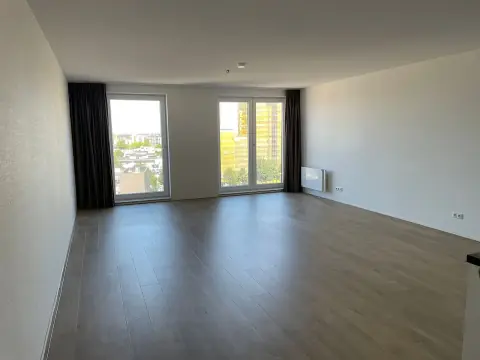
€1,159.00 / month

€600.00 / month
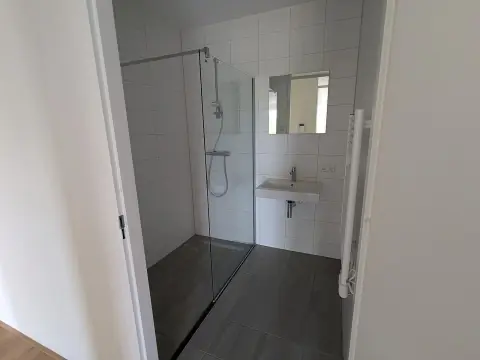
€932.00 / month
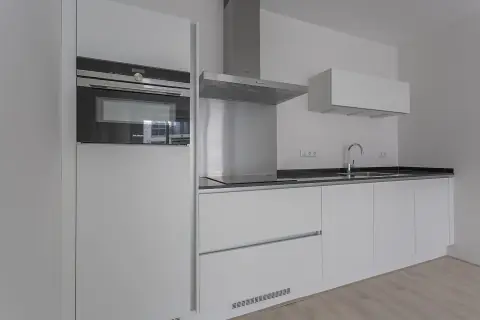
€1,187.00 / month
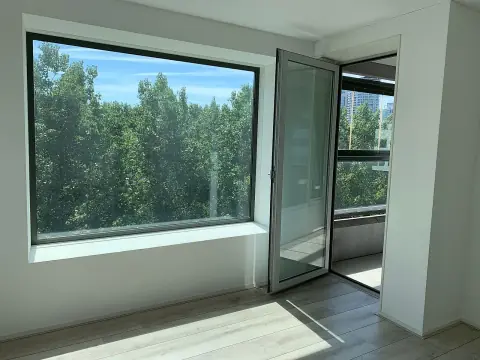
€1,845.00 / month
€933.00 / month
€1,899.00 / month
€765.00 / month
€714.00 / month

€1,596.00 / month
€714.00 / month
€1,210.00 / month
Luntero brings represented apartments, rooms, studios and houses from Dutch rental sources into one searchable place. Use the available filters to narrow your options, then check the original listing for current availability, price, conditions and application steps.
Browse rental listings collected from Funda, Pararius, Kamernet and other supported sources in one place. Coverage is broad but not exhaustive, and the original listing remains authoritative.
Navigate our clean and straightforward design effortlessly on both desktop and mobile devices for a seamless apartment, house, or room hunting experience in the Netherlands.
Browse rental listings in English, Dutch, Spanish, French, German, and more. Luntero ensures you can find your next home in the Netherlands in the language you're most comfortable with.
Luntero refreshes collected listings regularly and search alerts email new matches after a successful check. A source can change between refreshes, so verify decisive details there.