Chapter 2 of 11Understanding the Dutch Rental Market
- 1Introduction to Tenant Rights in the Netherlands
- 2Understanding the Dutch Rental Market
- 3Types of Rental Properties and Contracts
- 4Finding and Applying for a Rental Home
- 5Key Clauses in Dutch Rental Agreements
- 6Your Rights and Obligations as a Tenant
- 7Rent Pricing, Increases, and the Points System
- 8Deposits, Maintenance, and Repairs
- 9Dealing with Landlord Disputes and Evictions
- 10Ending Your Tenancy: Termination and Notice Rules
- 11Legal Support and Tenant Advocacy in the Netherlands
Table of Contents
Introduction
This chapter gives you a full, plain-English tour of how renting works in the Netherlands today. We explain the types of rental housing (social, middenhuur/mid-rent, and vrije sector/free market), how rents are set and increased, what changed with the Wet betaalbare huur (Affordable Rent Act) and Wet vaste huurcontracten (Fixed Tenancy Contracts Act), how to check whether your rent is legal, and what to do if it isn’t. Along the way you’ll find tables, worked examples, and step-by-step processes for common situations such as disputing rent with the Huurcommissie (Rent Tribunal), registering at the gemeente (BRP), and understanding service charges.
Why this matters: Dutch rules are detailed, and they differ by sector, city, and even the date your contract started. Not knowing them can cost you hundreds of euros per month, limit your ability to register, or leave you stuck with illegal service costs. This chapter is designed as a standalone reference you can read online or download, and it links to the official sources for every rule we cite.
Market overview: supply, competition, and what “furnished” really means
Demand is strongest in the Randstad (Amsterdam, Utrecht, The Hague, Rotterdam) and in tech hubs such as Eindhoven and Delft. Private market asking rents have been trending upward; independent data provider Pararius reported a year-on-year increase in Q2 2025 and confirmed Amsterdam remains the most expensive city by average price per square metre. Use their quarterly reports to benchmark city-level expectations before you start booking viewings.
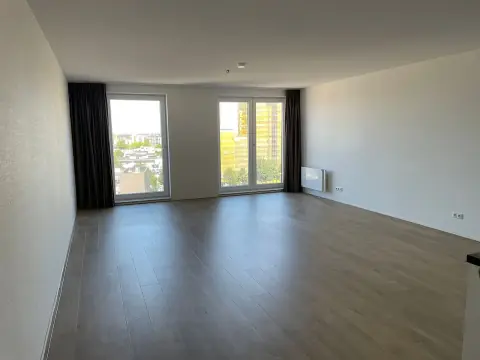
Pro Tip: In Dutch listings, gestoffeerd (“upholstered”) usually means flooring, curtains, and basic light fixtures are included; kaal/ongemeubileerd (“unfurnished”) can mean a truly bare shell where you provide flooring and lights; gemeubileerd (“furnished”) includes major furniture. This cultural nuance often surprises newcomers. Guides for internationals highlight these differences.
Competition is intense in city centres. Expect group viewings and fast decision cycles. Many landlords and agents use income screening; a common practice is net income of ~3x monthly rent (policy varies). Always ask for the WWS puntentelling (points sheet) and energielabel to see which legal regime applies (see below).
The three sectors: social, mid-rent (middenhuur), and free sector
Dutch law divides self-contained rentals into sectors according to the Woningwaarderingsstelsel (WWS points system). Points are awarded for size, amenities, energy performance, and more. The points total determines whether a dwelling is social, mid-rent, or free sector, and in regulated segments it caps the maximum lawful rent.
As of 1 January 2025 (price level 2025):
- Social sector: up to 143 points; initial rent capped; €900.07 marks the top of social for new tenancies.
- Mid-rent (middenhuur): 144–186 points; initial rent capped with a higher ceiling; the upper limit equals the liberalisation threshold, €1,184.82 at 2025 prices.
- Free sector (vrije sector): ≥ 187 points (for contracts on/after 1 July 2024); no WWS rent cap applies. For contracts signed before 1 July 2024 the threshold was ≥ 144 points.
Legal Tip: The Wet betaalbare huur took effect 1 July 2024, expanding rent protection up into the mid-segment and tasking municipalities with enforcement from 1 January 2025. If your landlord ignores the rules, your gemeente can act.
Sector snapshot (2025 price level)
| Segment | WWS points | Initial rent rules | Typical who/where |
|---|---|---|---|
| Social | ≤ 143 | Maximised by WWS; at or below €900.07 | Housing associations; citywide |
| Middenhuur | 144–186 | Maximised by WWS; up to €1,184.82 | Private & institutional landlords; urban areas |
| Vrije sector | ≥ 187 (≥ 144 if pre-1 Jul 2024 contract) | No WWS cap; annual increases capped by law | Prime locations, new builds, large/unique dwellings |
Sources: Huurcommissie thresholds and explanatory pages.
Big legal changes you must know (2024–2025)
1) Fixed contracts are the norm again
Since 1 July 2024, new tenants generally receive contracts for an indefinite period; short fixed-term contracts are the exception for specific groups (e.g., certain student or target-group lets). This is the Wet vaste huurcontracten. If you are offered a short fixed term, ask the agent to cite the exception.
2) Affordable Rent Act (Wet betaalbare huur)
Effective 1 July 2024, the Act modernised the WWS, expanded protection to the middenhuur, and required a WWS points sheet to be attached to new contracts (mandatory from 1 January 2025). Municipalities gained enforcement powers from 2025.
3) Good Landlord Act (Wet goed verhuurderschap)
National standards for landlord conduct include information duties, bans on discrimination and intimidation, the prohibition of double commission, and a maximum deposit of two months’ basic rent. Every municipality must have a Meldpunt Ongewenst Verhuurgedrag (report line) since 1 January 2024.
Scam Alert: Key money (sleutelgeld)—paying an extra “fee” just to get the keys—is illegal. If someone asks for it, walk away and report it.
Rent setting and increases
How the WWS cap works (social & middenhuur)
The WWS point total maps to a maximum lawful rent updated twice a year (now referenced to 1 January). Example from the Huurcommissie: 115 points ⇒ €714.57 (max for 1 Jan 2025). If your offered rent is €780 at 115 points, it exceeds the cap by €65.43 and can be lowered. Use the official Huurprijscheck to calculate your own cap.
Pro Tip: Always request the WWS puntentelling and energielabel from the landlord/agent before signing. If the energy data looks wrong, the Huurcommissie can test the energielabel as part of a rent case.
Annual rent increase caps (2025)
| Sector | Legal cap 2025 | Notes |
|---|---|---|
| Social | 5.0% (from 1 July 2025) | Central government sets this annually. |
| Middenhuur | 7.7% (from 1 Jan 2025) | New under Wet betaalbare huur. |
| Vrije sector | 4.1% (from 1 Jan 2025) | National cap linked to inflation/wages. |
If your contract lacks a valid rent-increase clause, a mid-term increase may not be allowed even if the statutory cap exists. Always read the indexation clause.
Up-front and ongoing costs
| Cost item | Typical amount | Legal notes |
|---|---|---|
| Deposit (waarborgsom) | 1–2 months’ basic rent | Max. 2 months nationwide since 1 July 2023 (Good Landlord Act). |
| First month’s rent | 1 month in advance | Pay after contract signing; avoid paying before viewing keys/ID are verified. |
| Agency fees to tenant | €0 when the agent acts for the landlord | Charging tenants double commission is unlawful under Dutch Civil Code rules; see consumer authority guidance. |
| Service costs (voorschot) | Highly variable (€25–€250+) | Annual statement must be provided; disputes go to Huurcommissie (incl. many vrije-sector contracts signed from 1 July 2024). |
| EPV (energy performance fee) | Only for near-zero-energy homes | Strict rules apply; see Rijksoverheid/RVO and Huurcommissie guidance. |
Legal Tip: Service charges must be settled yearly (for the previous calendar year). If you don’t receive the annual statement by 30 June, ask for it in writing; you can bring disputes to the Huurcommissie for up to two years after you should have received the statement.
Step-by-step: check and contest your rent
A) Check your maximum rent (social & middenhuur)
- Gather data: address, size (m²), amenities, energielabel, outside space, kitchen/bathroom quality.
- Run the Huurprijscheck for your dwelling type (self-contained or room).
- Compare the result with the rent in your contract; note any overcharge versus the WWS cap.
- Ask the landlord in writing to adjust the rent to the lawful maximum and refund overpayments.
- If no resolution, start a Huurcommissie case.
Legal Tip: For a new tenancy, you can have the initial rent tested by the Huurcommissie within the first six months of the contract (applies to social/mid-rent and rooms). Don’t miss the deadline.
B) Start a Huurcommissie case
- File online at MijnHuurcommissie with your evidence (WWS calculation, photos, contract).
- The tribunal may request additional documents or conduct an inspection.
- You’ll receive a binding decision on lawful rent and any back payments/refunds.
- If either party disagrees, they can go to court—most parties comply with the decision.
Huurcommissie procedures and policy handbooks are public; mid-2025 updates are online.
Energy performance, points, and special charges
Energy weighs heavily in WWS points. If the energielabel seems inconsistent with the home’s features, you can ask the Huurcommissie to test it within a rent case where there’s “gerede twijfel” (concrete reasons to doubt).
Some near-zero-energy social homes can carry an EPV (energieprestatievergoeding). This is a separate regulated fee to repay deep energy retrofits and on-site generation; it has statutory maxima and annual performance reporting. If you’re charged an EPV, verify that your home qualifies and that the amount sits below the table’s limit.
Pro Tip: No valid energielabel at move-in? The WWS may assume a conservative energy score based on build year, often lowering the allowable rent. Ask the landlord to provide the official label.
Responsibilities: who fixes what?
The Besluit kleine herstellingen lists everyday, low-cost repairs tenants must handle (e.g., replacing a toilet seat, descaling taps, bleeding radiators, small paintwork), while major maintenance such as exterior painting, roof, or boiler replacement is for the landlord. If serious defects persist, you can request rent reduction until repairs are made.
Responsibilities checklist
| Item | Tenant | Landlord |
|---|---|---|
| Replace light bulbs, descaling taps, lubricating hinges | ✅ | |
| Minor interior paint/patch, fixing loose knobs | ✅ | |
| Pest control (minor, no infestation) | ✅ | |
| Boiler replacement/major heating repairs | ✅ | |
| Exterior painting, roof, structural defects | ✅ | |
| Common-area cleaning (if included as service cost) | (via service cost) | ✅ (provide service) |
Sources: Rijksoverheid and the Besluit kleine herstellingen.
Registration (BRP), permits, and local nuances
Register at the municipality (BRP)
You must register your address with the municipality where you live. Moving within the Netherlands can be reported from four weeks before up to five days after the move; newcomers who will stay over four months must register within five days of arrival. Registration is a legal duty and enables things like health insurance and benefits. Landlords may not forbid registration.
Housing permits (huisvestingsvergunning)
Some cities require a housing permit for certain homes—traditionally at lower rents, and increasingly for middenhuur to target locals with middle incomes. Amsterdam introduced new mid-rent rules and a permit system in 2025; Utrecht and The Hague have similar arrangements. Always check the city’s website before applying.
Pro Tip: If a permit is required, factor the processing time into your move-in date; applications can be rejected if income doesn’t meet the local banding.
Typical costs by city (indicative ranges, private market)
Use this as a starting point for budgeting; actual rents vary by size, energy label, and location.
| City (private market) | Typical 1-bed | Typical 2-bed | Notes |
|---|---|---|---|
| Amsterdam | €1,500–€2,300 | €2,100–€3,200 | Highest €/m² nationally; strong competition. |
| Utrecht | €1,300–€2,000 | €1,800–€2,600 | Compact stock; fast cycles. |
| The Hague | €1,200–€1,900 | €1,600–€2,400 | More supply in outer districts. |
| Rotterdam | €1,200–€1,900 | €1,600–€2,300 | Strong new-build pipeline. |
| Eindhoven | €1,100–€1,800 | €1,500–€2,200 | Tech-driven demand. |
These ranges reflect Q2-2025 patterns reported by market data providers; always cross-check the latest Pararius report for exact €/m² by city.
Service costs: what counts, what doesn’t, and how to challenge them
Servicekosten cover things like cleaning common areas, lighting in stairwells, caretakers, and sometimes furnishings in a furnished let. They must be itemised annually and reconciled to actual costs; landlords cannot profit from service costs. If you disagree with the statement, request a correction; failing that, file with the Huurcommissie (including most new vrije-sector contracts since July 2024).
The Huurcommissie’s Servicekosten policy book shows what can and cannot be charged. For instance, general taxes, vacancy losses, and many owner costs are not service costs. Keep invoices and meter readings.
City-specific enforcement and tenant help
Municipalities now actively enforce the new rent rules. Amsterdam runs a help line with !WOON; Utrecht partners with Huurteam Utrecht. If you face intimidation, refusal to repair, or an evidently excessive rent, report it. These teams can also help you prepare a Huurcommissie case.
Pro Tip: Many cities have a Meldpunt Ongewenst Verhuurgedrag (Good Landlord Act). You can report issues anonymously.
Worked example: is my asking rent legal?
Suppose you view a 52 m² apartment with energielabel B, a balcony, and a standard kitchen/bathroom. The landlord provides a points sheet totaling 115 points. The Huurcommissie table example shows 115 points ⇒ €714.57 max (price level 1 Jan 2025). If the asking rent is €895, it exceeds the cap by ~€180. Ask the agent to correct the rent to the legal maximum or provide a revised points sheet with evidence (e.g., better energy performance). If they refuse, you can sign and apply within six months to the Huurcommissie to test the initial rent; if successful, they can order rent reduction and refunds.
Avoiding fraud and illegal charges
- Never wire a deposit before you see the property in person (or via a verified video showing today’s newspaper and the agent’s ID).
- Verify the landlord/agent’s identity and company registration; check that the person showing the home has the right to rent it out.
- Be wary of “too good to be true” listings, especially in popular areas. Rental platforms publish warning guides for spotting scams.
- Key money is illegal; double commission is illegal; deposit > 2 months is illegal. Report these immediately.
Scam Alert: If someone pressures you to pay via gift cards, crypto, or money transfer services to “reserve” a home, it’s a scam. Use traceable bank transfers after contract signing.
Regional and cultural quirks that affect budgeting
- Delivery level: A “kaal” apartment can be truly bare—no flooring or ceiling lights. Budget for basic fit-out.
- Energy label: A better label increases points and comfort but can also justify a higher lawful rent; ask for utility bills if possible.
- Housing permits: Cities can require permits for middenhuur allocation; Amsterdam does so from 2025.
- Municipal enforcement: As of 2025, gemeente teams enforce the Affordable Rent Act, and landlords must append a WWS points calculation to new contracts.
When and how to apply for huurtoeslag (housing allowance)
If your income and assets are below set thresholds and your rent falls within the allowable limits for your household, you may qualify for huurtoeslag. Apply via Belastingdienst – Mijn Toeslagen. The tax authority provides an eligibility tool and explains the conditions (income, assets, co-residents, rent boundaries). Always verify current thresholds before signing.
City policy spotlight: Amsterdam & Rotterdam (2025)
- Amsterdam: Introduced updated middenhuur policy in 2025 aligned to national law, with a maximum initial rent for mid-rent and a permit requirement for new mid-rent tenants to check income bands.
- Rotterdam: Communicates actively on the Affordable Rent Act and directs tenants to report excessive rents to the municipal Meldpunt.
Quick processes you’ll likely need
Registering your move (BRP)
- Go to your new gemeente’s website.
- Report your move up to 4 weeks before and no later than 5 days after moving; newcomers staying > 4 months must register within 5 days of arrival.
- Bring ID and any required civil documents (ask the gemeente).
- Keep proof of registration; you need it for benefits, insurance, and taxes.
Challenging a service-cost statement
- Ask your landlord for the annual statement (due by 30 June for the previous year).
- Request invoices and meter readings; list disputed items (e.g., taxes, vacancy losses—often not allowed).
- If unresolved, file with the Huurcommissie (you generally have two years from when the statement was due).
Disputing initial rent (social/mid-rent and rooms)
- Use the Huurprijscheck and gather proof.
- Send a written proposal for reduction to the landlord.
- If no agreement, file within six months of your start date.
Common mistakes to avoid
- Assuming “free market” always applies. Many homes that look private are regulated by the WWS, especially after July 2024. Always ask for the points.
- Paying illegal fees. Tenants don’t pay landlord’s agent fees; “key money” is illegal; deposits are legally capped.
- Missing deadlines. The six-month window to test initial rent is strict; so are service-cost timelines.
- Ignoring energy documentation. A missing or incorrect energielabel can distort points and therefore the lawful rent.
- Not registering. Failing to register your address (BRP) on time can block allowances and lead to fines; landlords cannot forbid registration.
Reference tables
A) Sectors and legal limits (2025)
| Item | Social | Middenhuur | Vrije sector |
|---|---|---|---|
| WWS points | ≤ 143 | 144–186 | ≥ 187 (≥ 144 for pre-1 Jul 2024 contracts) |
| Initial rent cap? | Yes (by WWS) | Yes (by WWS) | No (WWS cap not applicable) |
| Annual increase cap (2025) | 5.0% | 7.7% | 4.1% |
| Can go to Huurcommissie? | Yes | Yes (with conditions) | Service-costs disputes yes for many new contracts; rent disputes generally court unless misclassified |
| Source | Huurcommissie / Rijksoverheid | Huurcommissie / Rijksoverheid | Huurcommissie / Rijksoverheid |
Sources: sector thresholds, increase caps, and new enforcement powers.
B) Responsibilities (selected items)
| Area | Examples | Who pays |
|---|---|---|
| Small repairs | Light bulbs, descaling taps, lubricating hinges | Tenant |
| Major works | Roof, façade, boiler replacement, exterior paint | Landlord |
| Common areas | Cleaning/lighting via service costs | Tenant pays via actuals; landlord must account |
Sources: Rijksoverheid and the Besluit kleine herstellingen.
C) Cost comparison: indicative private market ranges
| City | 1-bed | 2-bed |
|---|---|---|
| Amsterdam | €1,500–€2,300 | €2,100–€3,200 |
| Utrecht | €1,300–€2,000 | €1,800–€2,600 |
| The Hague | €1,200–€1,900 | €1,600–€2,400 |
| Rotterdam | €1,200–€1,900 | €1,600–€2,300 |
| Eindhoven | €1,100–€1,800 | €1,500–€2,200 |
Source: indicative ranges informed by Pararius Q2-2025 trends; always consult the latest report for exact €/m².
Local compliance and permits (Amsterdam example)
Amsterdam updated its middenhuur policy in 2025 to align with national rules, including a maximum initial rent and a permit requirement for new mid-rent tenants using income tests. This complements national enforcement under the Affordable Rent Act. If you rent in Amsterdam, check whether your home requires a huisvestingsvergunning before move-in.
Quick glossary
- WWS (Woningwaarderingsstelsel): Points system that caps rents in social and middenhuur sectors.
- Huurcommissie: Independent body that decides rent and service-cost disputes out of court.
- Middenhuur: Regulated mid-market segment between social and free sector.
- Energielabel: Official energy rating that influences WWS points and sometimes EPV eligibility.
- EPV: Energy performance fee allowed for near-zero-energy social rentals under strict conditions.
Key Takeaways
- Since 1 July 2024, fixed contracts are again the norm; most short fixed terms are no longer allowed.
- The Affordable Rent Act (since 1 July 2024) extended rent caps into the mid-rent segment; municipalities enforce from 2025 and landlords must attach a WWS points sheet to new contracts.
- For contracts started on/after 1 July 2024: ≥ 187 points is free sector; 144–186 is middenhuur; ≤ 143 is social.
- 2025 rent-increase caps: social 5.0%, middenhuur 7.7%, free 4.1%.
- Deposit is legally capped at two months’ basic rent; double commission and key money are illegal.
- You must register your address (BRP) within the legal deadline; landlords cannot prohibit registration.
- Service costs require annual settlement by 30 June; you can dispute for up to two years after the statement was due.
- Always verify the WWS points and energielabel before signing; use the Huurprijscheck to confirm the maximum lawful rent.
Sources & Further Reading
- Rijksoverheid – Wet betaalbare huur; BRP registration; EPV rules; national rent policy.
- Huurcommissie – Sector thresholds, Huurprijscheck, procedures, service-cost policy.
- Volkshuisvesting Nederland – Good Landlord Act and municipal reporting points.
- Belastingdienst – Huurtoeslag (housing allowance) conditions and application.
- Pararius – Quarterly rental market reports for current price trends by city.
Renting well in the Netherlands means using the rules in your favour. With the WWS points, annual caps, and municipal enforcement now firmly in place, you can plan confidently, push back on illegal charges, and secure a lawful rent that fits your budget.