An administrative fine is a significant penalty imposed directly by a government body, bypassing the courts to enforce housing regulations.
Inventaris en Opnamestaat
The inventory and condition report is a detailed document, created during the move-in inspection, that records the state of the property and a list of all items included.
Terms from the same part of the rental process, so you can read them together instead of looking each one up separately.
An administrative fine is a significant penalty imposed directly by a government body, bypassing the courts to enforce housing regulations.
A single, legally problematic rental price where the basic rent and service costs are not separated.
Amortization, or aflossing, is the process of repaying the principal of a loan over time, a key component of the landlord's mortgage costs.
Landlords have a strict legal duty to comply with anti-discrimination laws, reinforced by new legislation that mandates fair and transparent tenant selection procedures.
Arbitration is a formal, private method of dispute resolution where a neutral arbitrator makes a binding decision, serving as an alternative to a public court.
Clauses in rental agreements that force a tenant into binding arbitration are heavily restricted in the Netherlands and are often legally unenforceable.
Before relying on Inventory and Condition Report, distinguish exceptions from meaning and applications. Use current official guidance or qualified advice where the term affects an individual decision.
Every glossary entry that belongs to Legal Terms, collected on one page.
See TermsLook up a term, abbreviation or contract phrase and get a plain-language explanation with Dutch and English wording.
Search termsLonger guides that walk through applications, contracts, costs and moving, with the terminology used in context.
Read the guidesExplore the latest properties added to Luntero. Find new apartments, houses, and studios across the Netherlands — updated daily to help you discover your next home faster.
Luntero brings represented apartments, rooms, studios and houses from Dutch rental sources into one searchable place. Use the available filters to narrow your options, then check the original listing for current availability, price, conditions and application steps.
Browse rental listings collected from Funda, Pararius, Kamernet and other supported sources in one place. Coverage is broad but not exhaustive, and the original listing remains authoritative.
Navigate our clean and straightforward design effortlessly on both desktop and mobile devices for a seamless apartment, house, or room hunting experience in the Netherlands.
Browse rental listings in English, Dutch, Spanish, French, German, and more. Luntero ensures you can find your next home in the Netherlands in the language you're most comfortable with.
Luntero refreshes collected listings regularly and search alerts email new matches after a successful check. A source can change between refreshes, so verify decisive details there.
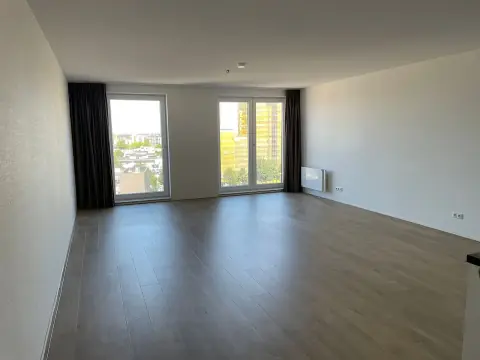
Opnamestaat and Inventarislijst: Your Most Important DocumentsWhen you begin your tenancy, two documents are created that are arguably as important as the lease agreement itself. Together, they form a comprehensive snapshot of the property you are taking possession of. The first is the condition report (opnamestaat). This document focuses on the property's fixed elements. It is a room-by-room record of the state of the walls, ceilings, floors, windows, doors, bathroom fixtures, and kitchen appliances. Its sole purpose is to document any pre-existing damage or defects, no matter how minor. Every scratch on the floor, every crack in a tile, every scuff mark on the wall should be meticulously noted in the opnamestaat.
The second document, which is essential for furnished (gemeubileerd) or semi-furnished (gestoffeerd) properties, is the inventory list (inventarislijst). This is a detailed list of every single movable item provided by the landlord. It should enumerate everything from major pieces of furniture like the bed and sofa, down to the number of forks, knives, and spoons in the kitchen drawer. The inventory list should not just name the items, but also briefly describe their condition (e.g., 'dining table - light scratches on surface,' 'armchair - slight fading on left arm'). These two documents together form the complete picture that will be used as the benchmark at the end of your tenancy.
The move-in inspection, where these reports are created, is not a time for politeness or haste. You must adopt a forensic, almost pessimistic, mindset. Your guiding principle should be: if it is not written down in this report, it legally does not exist. When you move out, any damage not noted in the initial report will be presumed to have been caused by you. Therefore, you must be painstakingly thorough. Go through the property with the agent or landlord and point out every single flaw. Do not accept assurances like, 'Oh, don't worry about that.' If it's a flaw, insist it be written down. For the inventory list, physically count the items. If the list says twelve wine glasses and there are only eleven, make a note. If the sofa has a stain, ensure the report specifies its location and size.
In addition to the written report, you must create your own visual record. Take hundreds of high-resolution, time-stamped photos and videos on your phone. Photograph every room from multiple angles. Take close-up shots of every noted defect. Take pictures of the utility meter readings. This digital evidence is an invaluable backup to the written report and can be decisive in resolving any future disputes over your security deposit.
At the end of the inspection, you will be asked to sign the condition report and inventory list. By signing, you are legally attesting to the accuracy of the document. It becomes a formal addendum to your lease agreement. This signed document is the landlord's proof of the property's initial condition, but it is also your primary shield against unfair claims at the end of the tenancy. If a landlord tries to charge you for a scratch that was noted in the initial report, you have irrefutable proof that you are not liable.
What happens if no report is created? This is a huge red flag, but the legal consequences fall on the landlord. Under Dutch law, if there is no signed move-in inspection report, the law presumes that the tenant received the property in the state it is in at the end of the lease, excluding any changes the landlord can prove were caused by the tenant. This flips the burden of proof entirely onto the landlord. While this sounds like an advantage, the ambiguity and potential for conflict it creates are best avoided. Always insist on a detailed, joint inspection and a signed report.

€1,159.00 / month

€600.00 / month

€932.00 / month

€1,187.00 / month

€1,845.00 / month

€933.00 / month

€1,899.00 / month

€765.00 / month

€714.00 / month

€1,596.00 / month

€714.00 / month

€1,210.00 / month