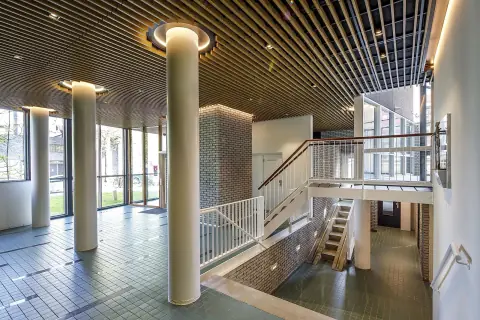
The legal standards for accessibility in residential buildings, which are primarily enforced for new constructions and major renovations.
Gebrekenmelding
A defect report is your formal notification to the landlord about maintenance issues or broken items in your rental property.
Terms from the same part of the rental process, so you can read them together instead of looking each one up separately.
The legal standards for accessibility in residential buildings, which are primarily enforced for new constructions and major renovations.
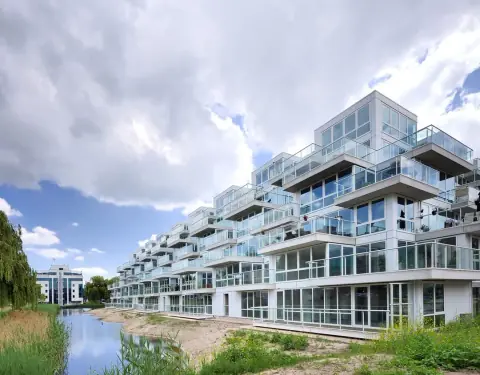
Balcony safety compliance refers to the legal requirement for balconies and railings to meet specific structural and safety standards.
No subsidy exists for basement waterproofing; a damp or leaking basement is a maintenance defect that the landlord is legally required to fix at their own cost.
The essential regular servicing of the central heating boiler, a legal responsibility of the landlord to ensure safety and efficiency.
Building code compliance is the landlord's duty to provide a property that meets the national technical standards for safety, health, and usability set out in the 'Bouwbesluit'.
An insurance policy that covers the physical structure of the property, which is the landlord's responsibility.
The practical relevance of Defect Report (Gebrekenmelding) becomes clearer when exceptions, case context, and authority are separated.
Every glossary entry that belongs to Landlord Obligations, collected on one page.
See TermsLook up a term, abbreviation or contract phrase and get a plain-language explanation with Dutch and English wording.
Search termsLonger guides that walk through applications, contracts, costs and moving, with the terminology used in context.
Read the guidesExplore the latest properties added to Luntero. Find new apartments, houses, and studios across the Netherlands — updated daily to help you discover your next home faster.
Luntero brings represented apartments, rooms, studios and houses from Dutch rental sources into one searchable place. Use the available filters to narrow your options, then check the original listing for current availability, price, conditions and application steps.
Browse rental listings collected from Funda, Pararius, Kamernet and other supported sources in one place. Coverage is broad but not exhaustive, and the original listing remains authoritative.
Navigate our clean and straightforward design effortlessly on both desktop and mobile devices for a seamless apartment, house, or room hunting experience in the Netherlands.
Browse rental listings in English, Dutch, Spanish, French, German, and more. Luntero ensures you can find your next home in the Netherlands in the language you're most comfortable with.
Luntero refreshes collected listings regularly and search alerts email new matches after a successful check. A source can change between refreshes, so verify decisive details there.
A 'gebrekenmelding', or defect report, is the formal process by which a tenant notifies their landlord of a problem with the rental property that requires repair. This isn't just a casual complaint; it's a critical step in asserting your rights and triggering the landlord's legal obligations. The Dutch legal definition of a 'gebrek' (defect) is broad and powerful: it's not just a broken item, but any condition or characteristic of the property that diminishes the 'huurgenot'—the quiet enjoyment and use—that a tenant can reasonably expect from the agreement. This could range from a major issue like a complete heating system failure in January to something less urgent but still significant, like a constantly jamming front door lock.
However, not all maintenance issues are the landlord's problem. The law makes a clear distinction between major defects, which are the landlord's responsibility, and minor repairs ('kleine herstellingen'), which are the tenant's responsibility. The specific tasks falling to the tenant are outlined in the 'Besluit kleine herstellingen'. Generally, the tenant is responsible for small, inexpensive, and easy-to-perform tasks that result from daily use. This includes replacing light bulbs, bleeding radiators, tightening loose screws on doorknobs or cabinets, and fixing a dripping tap by replacing a washer. The landlord, conversely, is responsible for the 'big ticket' items: maintaining the structural integrity of the building (roof, walls, foundation), resolving serious leaks, ensuring the proper function of central heating and plumbing systems, fixing broken windows, and tackling pest infestations that were not caused by the tenant's negligence. Unsurprisingly, landlords may attempt to blur this line, hoping a tenant will pay for a repair that is legally the landlord's duty.
When you discover a defect that is the landlord's responsibility, prompt and proper notification is key. While an initial phone call or WhatsApp message is a good way to give a quick heads-up, it should always be followed by a formal, written notification. An email is typically sufficient and provides a clear, time-stamped record. For very serious issues or if the landlord is known to be unresponsive, sending a registered letter (aangetekende brief) provides undeniable proof of delivery. This written gebrekenmelding is your legal cornerstone. It should clearly and calmly:
redelijke termijn).The definition of a 'reasonable timeframe' is context-dependent. A total loss of heating and hot water in winter demands an immediate response, likely within 24 hours. A non-urgent issue, like a broken handle on an internal door, might have a reasonable repair timeframe of a few weeks. Documenting every communication is crucial. If you speak on the phone, follow up with an email summarizing the conversation: "As per our phone call today, I am confirming the report of the leaking radiator in the living room..."
An unresponsive landlord is a common frustration for tenants. If your initial defect report and follow-ups are ignored and the 'reasonable timeframe' passes, you must escalate the process formally. You cannot simply withhold rent, as this would put you in breach of your contract. The correct next step is to send a letter of default (ingebrekestelling). This is a final formal notice, sent by registered post, that gives the landlord one last, firm deadline to carry out the repair. It informs them that if they fail to act by this deadline, they will be legally in default, and you will be entitled to pursue further remedies.
If the landlord is still in default, the tenant has several powerful options:
Huurcommissie: You can start a case with the Rental Tribunal (Huurcommissie). They can assess the severity of the defect and grant you a temporary, retroactive rent reduction proportional to your loss of 'enjoyment'. The reduction remains in effect until the landlord proves the defect has been fixed.kantonrechter) to force the landlord to perform the repair and potentially claim compensation for any damages you suffered as a result of the defect.
€1,159.00 / month

€600.00 / month

€932.00 / month

€1,187.00 / month

€1,845.00 / month

€933.00 / month

€1,899.00 / month

€765.00 / month

€714.00 / month

€1,596.00 / month

€714.00 / month

€1,210.00 / month