Ede
Ede is the town Wageningen relies on for the train: Intercity services, forest and heath on the Veluwe edge, and newer districts, a bus ride from Wageningen's campus.
- Easy commute
- Green and outdoors
Anyone based in Wageningen soon learns that the nearest main-line station is not in Wageningen at all but in Ede, where Intercity trains run toward Utrecht, Amsterdam and Schiphol and a Sprinter heads to Arnhem. Living in Ede puts you on that rail corridor while Wageningen University & Research stays within bus reach. The town borders the Hoge Veluwe national park and is ringed by woodland and heath, so the green setting survives the move, and the working world is broader, with a mix of manufacturers and a food research institute besides education.
What works
- Intercity trains toward Utrecht and Amsterdam
- Forest, heath and Hoge Veluwe next door
- Newer districts and barracks redevelopment
- Broader mix of employers than a university town
Trade-offs
- Main station sits outside the town centre
- Campus is a bus ride away
- Far less student life and international feel
- Metro, tram or bus · 20–26 minStation Ede-Wageningen to Busstationdirect · 9× per hour
- Bike · 33 minStation Ede-Wageningen to Busstation7 km
- Car · 13 minStation Ede-Wageningen to Busstation10 km
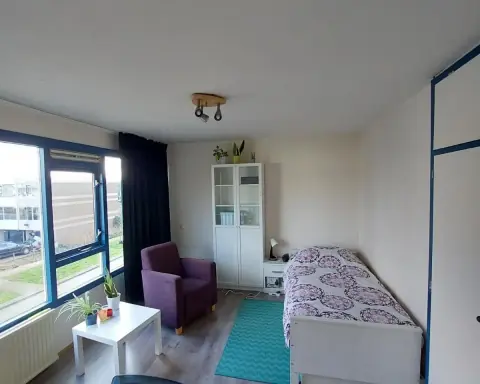
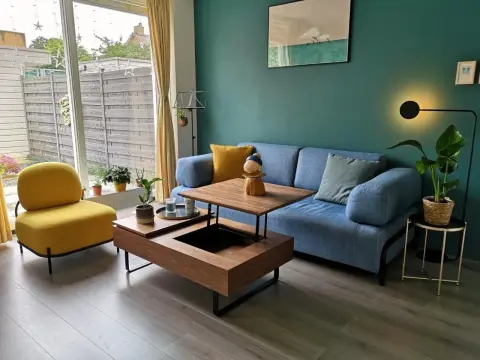
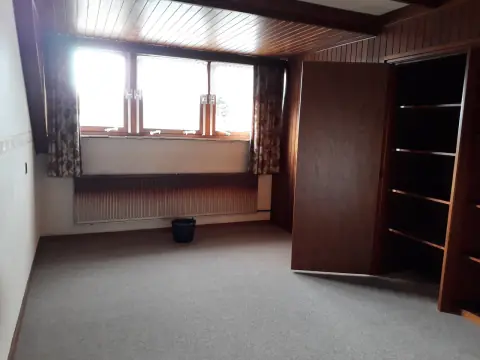
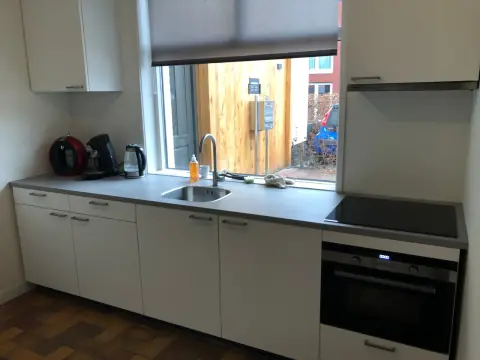
Wageningen's housing is shaped by its university: a compact town with a large student population and a historic centre rebuilt after wartime damage. Ede is a mid-sized city, partly built in forest, with older districts around the centre, newer neighbourhoods such as Veldhuizen, Maandereng and Rietkampen, and Kernhem as a recent development area. Former barracks land is being turned into homes, so new-build is part of the picture, and the tenant mix is closer to an ordinary mixed town than a campus crowd.
- Quickest trip
- 20 mindirect
- Rent vs Wageningen
- €25/m²37% cheaper
- Homes now
- 16