A fee charged for administrative actions, which is almost always illegal when levied on a tenant by a landlord's agent.
huurverhoging
A rent increase is the annual adjustment of the rental price, which is strictly regulated by the Dutch government for both free and social sectors.
Terms from the same part of the rental process, so you can read them together instead of looking each one up separately.
A fee charged for administrative actions, which is almost always illegal when levied on a tenant by a landlord's agent.
An administrative fee, often called 'contractkosten' or a lease initiation fee, is a charge for drawing up the rental agreement, the legality of which is highly questionable.
'Leges' are administrative fees charged by government bodies for providing a specific service or processing an application.
An agency fee, also known as a broker fee or 'courtage', is a charge for real estate brokerage services which, by law, cannot be charged to a tenant if the agent is working for the landlord.
An alarm system fee is a recurring cost for professional monitoring, and responsibility for payment depends on what is agreed in the rental contract.
Paying residential rent annually is not a standard practice in the Netherlands; the law and market are based on monthly payments.
Use Rent Increase to clarify exceptions, then check contracts and official guidance wherever the term affects a real decision.
Every glossary entry that belongs to Rental Costs, collected on one page.
See TermsLook up a term, abbreviation or contract phrase and get a plain-language explanation with Dutch and English wording.
Search termsLonger guides that walk through applications, contracts, costs and moving, with the terminology used in context.
Read the guidesExplore the latest properties added to Luntero. Find new apartments, houses, and studios across the Netherlands — updated daily to help you discover your next home faster.
Luntero brings represented apartments, rooms, studios and houses from Dutch rental sources into one searchable place. Use the available filters to narrow your options, then check the original listing for current availability, price, conditions and application steps.
Browse rental listings collected from Funda, Pararius, Kamernet and other supported sources in one place. Coverage is broad but not exhaustive, and the original listing remains authoritative.
Navigate our clean and straightforward design effortlessly on both desktop and mobile devices for a seamless apartment, house, or room hunting experience in the Netherlands.
Browse rental listings in English, Dutch, Spanish, French, German, and more. Luntero ensures you can find your next home in the Netherlands in the language you're most comfortable with.
Luntero refreshes collected listings regularly and search alerts email new matches after a successful check. A source can change between refreshes, so verify decisive details there.
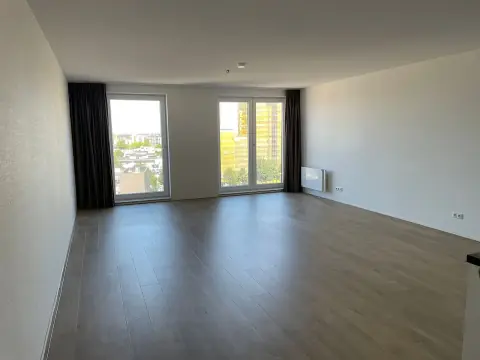
Jaarlijkse HuurverhogingThe price you agree upon in your initial rental contract is not set in stone forever. In the Netherlands, it is a standard and legally enshrined practice for landlords to increase the rent periodically. This is known as the annual rent increase (jaarlijkse huurverhoging). A core rule governing this process is that a landlord is permitted to increase the rent only once in any 12-month period. A landlord attempting to raise the rent twice in one year is acting illegally. Furthermore, the landlord cannot simply impose the increase without warning. They are legally required to send the tenant a written proposal for the rent increase at least two months before it is due to take effect. This proposal must clearly state the current rent, the proposed new rent, the percentage of the increase, and the date on which the new price will apply. This structured process is designed to provide tenants with predictability and the opportunity to verify the legality of the increase.
It is crucial to understand that this is a proposal, not a binding order. While most increases are legal and tenants accept them, you are not obligated to agree to an increase that violates the legal limits. The system is designed to prevent landlords from arbitrarily hiking prices and to keep rent inflation within government-controlled boundaries, even in the private sector.
The maximum allowable rent increase depends entirely on whether you live in the social housing sector (sociale huur) or the free sector (vrije sector). The rules for each are set annually by the government. For the free sector, which encompasses the majority of private rental properties available to expats, the government has implemented a cap to curb excessive price hikes. As of recent legislation, the maximum annual increase is linked to either the national inflation rate (Consumer Price Index) or the average national wage development as determined by collective labor agreements (CAO), using whichever figure is lower, plus a small margin of 1%. This prevents rent from outpacing the general economy and a tenant's earning capacity.
For the social housing sector, the rules can be more complex and may involve income-dependent increases. In this system, tenants with higher incomes may face a larger percentage increase than those with lower incomes, as a policy measure to encourage high earners to move out of subsidized housing. For any tenant, regardless of sector, it is absolutely essential to check the official government websites (like Rijksoverheid.nl) or the Woonbond (Tenants' Association) each year to confirm the maximum legal percentage increase for their specific situation. Do not take the landlord's proposed figure at face value.
If your landlord proposes a rent increase that exceeds the legally permitted maximum for that year, you have a strong legal position to challenge it. The first step is to formally object to the proposal in writing. This should be done via a registered letter (aangetekende brief) to the landlord before the proposed date of the increase. In your letter, you should clearly state that you are rejecting the proposal because it is above the legal maximum and present the correct calculation based on the government-mandated percentage. Often, this is enough to make a landlord who was 'trying their luck' back down.
If the landlord refuses to amend the proposal and insists on the illegal increase, you should not simply pay it. Your next step is to bring the case to the Huurcommissie (Rent Tribunal). The Huurcommissie is a low-cost, impartial body that can issue a binding ruling on disputes between tenants and landlords, including disagreements over rent increases. They will assess the case and determine the legally correct rental price. Many tenants are intimidated by this process, but it is designed to be accessible and to protect tenants from unlawful practices. Knowing and exercising this right is a crucial part of being a renter in the Netherlands.

€1,159.00 / month

€600.00 / month

€932.00 / month

€1,187.00 / month

€1,845.00 / month

€933.00 / month

€1,899.00 / month

€765.00 / month

€714.00 / month

€1,596.00 / month

€714.00 / month

€1,210.00 / month