An administrative fine is a significant penalty imposed directly by a government body, bypassing the courts to enforce housing regulations.
ingangsdatum en sleuteloverdracht
These terms define the date from which a tenant has the legal right to occupy a property and typically begins paying rent.
Terms from the same part of the rental process, so you can read them together instead of looking each one up separately.
An administrative fine is a significant penalty imposed directly by a government body, bypassing the courts to enforce housing regulations.
A single, legally problematic rental price where the basic rent and service costs are not separated.
Amortization, or aflossing, is the process of repaying the principal of a loan over time, a key component of the landlord's mortgage costs.
Landlords have a strict legal duty to comply with anti-discrimination laws, reinforced by new legislation that mandates fair and transparent tenant selection procedures.
Arbitration is a formal, private method of dispute resolution where a neutral arbitrator makes a binding decision, serving as an alternative to a public court.
Clauses in rental agreements that force a tenant into binding arbitration are heavily restricted in the Netherlands and are often legally unenforceable.
Before relying on Occupancy and Move-In Date, distinguish exceptions from Dutch context and related terms. Use current official guidance or qualified advice where the term affects an individual decision.
Every glossary entry that belongs to Legal Terms, collected on one page.
See TermsLook up a term, abbreviation or contract phrase and get a plain-language explanation with Dutch and English wording.
Search termsLonger guides that walk through applications, contracts, costs and moving, with the terminology used in context.
Read the guidesExplore the latest properties added to Luntero. Find new apartments, houses, and studios across the Netherlands — updated daily to help you discover your next home faster.
Luntero brings represented apartments, rooms, studios and houses from Dutch rental sources into one searchable place. Use the available filters to narrow your options, then check the original listing for current availability, price, conditions and application steps.
Browse rental listings collected from Funda, Pararius, Kamernet and other supported sources in one place. Coverage is broad but not exhaustive, and the original listing remains authoritative.
Navigate our clean and straightforward design effortlessly on both desktop and mobile devices for a seamless apartment, house, or room hunting experience in the Netherlands.
Browse rental listings in English, Dutch, Spanish, French, German, and more. Luntero ensures you can find your next home in the Netherlands in the language you're most comfortable with.
Luntero refreshes collected listings regularly and search alerts email new matches after a successful check. A source can change between refreshes, so verify decisive details there.
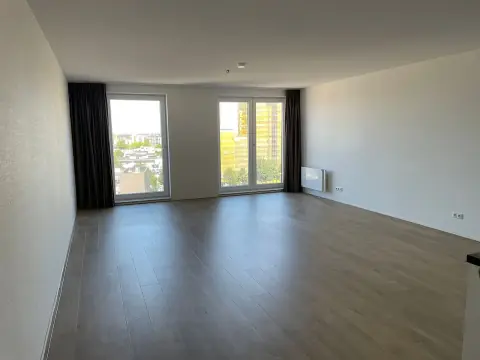
In the world of Dutch rentals, the concepts of an 'occupancy date' and a 'move-in date' are often used interchangeably, but they represent a legal and a practical milestone that don't always align perfectly. The Occupancy Date (Ingangsdatum huurcontract) is the formal date the lease agreement legally commences. This is the moment your rights and responsibilities as a tenant officially begin. Crucially, it is the date from which the landlord starts calculating your rent payments. This date is set in stone within your contract and serves as the anchor for all legal timeframes, such as the contract's duration and notice periods. It is, for all intents and purposes, the birthday of your tenancy.
The Move-in Date, on the other hand, is a more practical term, often referring to the day of the key handover (sleuteloverdracht). This is the day you physically receive the keys and can finally access the property to start unloading your boxes. In a perfect world, the occupancy date and the key handover happen on the same day. However, you should be skeptical of any discrepancies. For example, if your contract's start date is August 1st, but the landlord says you can't get the keys until August 5th due to cleaning or repairs, you have a problem. Why should you pay rent for days when you have no legal access to the property? In such a scenario, you are well within your rights to demand that the rent be prorated or that the official start date of the contract be amended to reflect the actual date you are given possession of the property. Never pay for a property you cannot access; document all such conversations in writing.
The day you get the keys is not just about excitement; it's a moment of critical importance that requires vigilance. The move-in inspection (opleveringsinspectie) is a formal process where you and the landlord (or their agent) walk through the property to document its condition before you move in. The result of this inspection is a written report, often called an opnamestaat or inspectierapport, which should be signed by both parties. This document is arguably as important as the lease itself. Its purpose is to create an objective record of any and all pre-existing damage, defects, or issues. Without this report, Dutch rental law operates on a damning assumption: that you, the tenant, received the property in perfect condition.
This means that at the end of your tenancy, without a detailed move-in report to prove otherwise, you can be held financially liable for every single scuff mark, cracked tile, and malfunctioning appliance in the place. Therefore, during the inspection, you must transform into the most meticulous detective you can be. Do not be rushed. Open every cabinet, turn on every tap, flush every toilet, and check every electrical outlet. Take hundreds of high-resolution, time-stamped photos and videos of everything, especially imperfections. Insist that every single issue—no matter how minor—is noted in the written report. A lazy landlord might say, 'Oh, don't worry about that little scratch.' You must worry about it. If it's not on the report, it legally becomes your scratch when you move out. A refusal by the landlord to conduct a proper, detailed joint inspection is a massive red flag.
In some cases, a landlord might offer what seems like a generous favor: early access to the property. Perhaps your lease officially starts on the first of the month, but they offer to give you the keys a few days early so you can start moving your belongings or have the floors installed. While this can be a welcome convenience, you should approach such offers with a healthy dose of skepticism. An informal, undocumented agreement for early access can blur legal lines and create significant ambiguity. The most pressing question is one of liability. If you have access to the property, are you now legally responsible for it, even before your lease begins? What happens if there's a water leak or a break-in during this 'grace period'?
Before accepting any offer of early access, it is essential to get the terms clarified in writing. A simple email addendum to the lease will suffice. This should state the exact date you are being granted access and explicitly clarify that your formal tenancy and rent obligations do not begin until the official start date specified in the main contract. It should also confirm that the official move-in inspection will still take place on the formal start date, not during the early access period. This prevents the landlord from later claiming that by taking the keys early, you implicitly accepted the property 'as-is.' A friendly offer can easily turn into a legal trap if the terms are not clearly defined and documented, potentially costing you time, money, and peace of mind.

€1,159.00 / month

€600.00 / month

€932.00 / month

€1,187.00 / month

€1,845.00 / month

€933.00 / month

€1,899.00 / month

€765.00 / month

€714.00 / month

€1,596.00 / month

€714.00 / month

€1,210.00 / month