An administrative fine is a significant penalty imposed directly by a government body, bypassing the courts to enforce housing regulations.
vertrekdatum
The move-out date is the final day of the lease agreement, by which the tenant must vacate the property and return the keys.
Terms from the same part of the rental process, so you can read them together instead of looking each one up separately.
An administrative fine is a significant penalty imposed directly by a government body, bypassing the courts to enforce housing regulations.
A single, legally problematic rental price where the basic rent and service costs are not separated.
Amortization, or aflossing, is the process of repaying the principal of a loan over time, a key component of the landlord's mortgage costs.
Landlords have a strict legal duty to comply with anti-discrimination laws, reinforced by new legislation that mandates fair and transparent tenant selection procedures.
Arbitration is a formal, private method of dispute resolution where a neutral arbitrator makes a binding decision, serving as an alternative to a public court.
Clauses in rental agreements that force a tenant into binding arbitration are heavily restricted in the Netherlands and are often legally unenforceable.
The Move-Out Date entry explains general usage; exceptions, Dutch context, and official guidance determine how far that explanation applies.
Every glossary entry that belongs to Legal Terms, collected on one page.
See TermsLook up a term, abbreviation or contract phrase and get a plain-language explanation with Dutch and English wording.
Search termsLonger guides that walk through applications, contracts, costs and moving, with the terminology used in context.
Read the guidesExplore the latest properties added to Luntero. Find new apartments, houses, and studios across the Netherlands — updated daily to help you discover your next home faster.
Luntero brings represented apartments, rooms, studios and houses from Dutch rental sources into one searchable place. Use the available filters to narrow your options, then check the original listing for current availability, price, conditions and application steps.
Browse rental listings collected from Funda, Pararius, Kamernet and other supported sources in one place. Coverage is broad but not exhaustive, and the original listing remains authoritative.
Navigate our clean and straightforward design effortlessly on both desktop and mobile devices for a seamless apartment, house, or room hunting experience in the Netherlands.
Browse rental listings in English, Dutch, Spanish, French, German, and more. Luntero ensures you can find your next home in the Netherlands in the language you're most comfortable with.
Luntero refreshes collected listings regularly and search alerts email new matches after a successful check. A source can change between refreshes, so verify decisive details there.
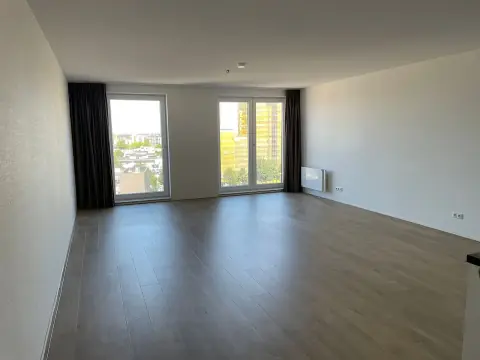
The move-out date marks the conclusion of your rental journey, and like the beginning, it's a process governed by strict rules and potential pitfalls. The official end date of the contract (einddatum huurcontract) is the legal day your tenancy ceases to exist. For a fixed-term lease (bepaalde tijd), this date is clearly specified in the agreement you signed. For an indefinite-term lease (onbepaalde tijd), the end date is determined by when you, the tenant, give notice. A tenant's notice period in the Netherlands is legally fixed at one calendar month, regardless of what your contract might say. This means if you give notice on May 15th, your move-out date will be June 30th. Your responsibility to pay rent extends to this final day.
On this end date, two critical events must occur: you must have completely vacated the property of all your belongings, and you must participate in the final inspection (eindinspectie). This inspection is the landlord's opportunity to assess the property for any damages that go beyond 'normal wear and tear' (normale slijtage). It is the moment of truth where the condition of the property is compared directly against the initial move-in inspection report (opnamestaat). This meeting is the primary battleground for disputes over the security deposit. A tenant's absence from this inspection is a terrible idea; it gives the landlord free rein to document alleged damages without your input or rebuttal. Always insist on being present and having a copy of the final report signed by both parties.
Your primary obligation at the end of a lease is to return the property to the landlord in the same condition you received it, with the exception of changes resulting from normal aging and everyday use. This is where the term 'normal wear and tear' (normale slijtage) becomes a frustratingly vague but critically important concept. Faded paint, minor scuff marks on walls from furniture, or a carpet that is slightly worn from being walked on are generally considered normal wear and tear. However, large stains, a hole punched in a door, or a broken window are clearly considered damages for which you are financially liable. The initial move-in report is your greatest defense here; without it, the landlord can blame you for damage that was already present when you moved in.
What about improvements you've made? Perhaps you repainted the walls from a garish yellow to a tasteful white or installed a new, high-end showerhead. Unless you received explicit, written permission from the landlord to make these changes and leave them behind, you are generally obligated to undo them. This is known as the wegneemrecht (right to take away). You have the right to remove the improvements you made, but you must also repair any damage caused by the removal. This means if you installed a new laminate floor over the landlord's concrete, you may be required to remove it and leave the bare concrete floor as you found it. Many landlords will demand you repaint the walls back to the original color (often a standard white, RAL 9010) at your own expense. Failing to restore the property to its original state can result in significant deductions from your security deposit, as the landlord will hire contractors to do the work and bill you for it.
The final act of any tenancy is the settlement of the security deposit (borg). This sum, which you paid at the beginning of your lease, serves as the landlord's financial protection against damages and rent arrears. The outcome of the move-out inspection directly determines how much of it you get back. Following the inspection, if damages are found, the landlord cannot simply invent a number to deduct. They must provide you with a detailed, itemized list of the costs for repair. Ideally, this should be supported by official receipts from contractors or, for smaller items, reasonable estimates for materials.
Landlords often try to charge for a full replacement of an item that was already old. This is illegal; they can only charge for the remaining depreciated value. For example, you can't be charged for a brand-new carpet if the one you damaged was already 10 years old. There is no single, legally mandated timeframe for the return of the deposit, which is a source of constant frustration. The general legal principle is that it must be returned within a 'reasonable period.' This is commonly interpreted as being between 14 days and 3 months after the lease ends, depending on whether repairs are needed. If a landlord is unfairly withholding your deposit or making unjustifiable deductions, do not let it go. Send them a formal letter (aangetekende brief) demanding its return and, if that fails, do not hesitate to seek legal assistance from organizations like the Juridisch Loket or to start a case with the Huurcommissie if applicable. Many landlords bank on tenants giving up, especially expats who may have already left the country.

€1,159.00 / month

€600.00 / month

€932.00 / month

€1,187.00 / month

€1,845.00 / month

€933.00 / month

€1,899.00 / month

€765.00 / month

€714.00 / month

€1,596.00 / month

€714.00 / month

€1,210.00 / month