Unlocking 120,000 Homes: Renovating Existing Buildings to Ease the Dutch Housing Shortage
Renovating and repurposing existing buildings could yield up to 120,000 new homes in the Netherlands by 2030, offering a sustainable, quick-win solution to the housing crisis.
Guide last updated on: June 7, 20264 min read
Table of Contents
Table of Contents
Further Reading on Renting in the Netherlands
Newest Properties in the Netherlands
Explore the latest properties added to Luntero. Find new apartments, houses, and studios across the Netherlands — updated daily to help you discover your next home faster.
Why Luntero
One Workspace for Your Dutch Rental Search
Luntero combines apartments, rooms, studios and houses from rental websites with homes published directly on Luntero. Filter by your needs, compare your options and confirm availability, price and conditions with the advertiser.
Listings From Many Dutch Sources
Browse listings from Funda, Pararius, Kamernet and other supported websites alongside rentals published directly on Luntero. Coverage is broad, but does not include every home on the market.
Intuitive User-Friendly Interface
Navigate our clean and straightforward design effortlessly on both desktop and mobile devices for a seamless apartment, house, or room hunting experience in the Netherlands.
Multilingual Support for Expats & Locals
Browse rental listings in English, Dutch, Spanish, French, German, and more. Luntero ensures you can find your next home in the Netherlands in the language you're most comfortable with.
Regular Listing Refreshes
Luntero refreshes collected listings regularly and search alerts email new matches after a successful check. A source can change between refreshes, so verify decisive details there.
Understand Dutch rental terms before you sign the lease.
Renting in the Netherlands comes with unique rules, legal phrases, and housing abbreviations that can be tricky. The Luntero Rental Glossary is your guide to every rental term — from tenancy agreements, deposits, and agency fees to utility charges, rent control, and tenant rights. Whether you’re new to renting, moving as an expat, or just want to avoid hidden costs, our glossary helps you rent smarter, negotiate better, and protect yourself from mistakes.
Unlocking 120,000 Homes: Renovating Existing Buildings to Ease the Dutch Housing Shortage
The Netherlands faces a pressing housing shortage, with the government aiming to add over 900,000 homes to the national stock by 2030. While new construction remains the cornerstone of this strategy, a recent study by the Economic Institute for Construction (EIB) highlights a powerful, underused alternative: renovating and repurposing existing buildings. According to the EIB, current regulations alone could yield 100,000 to 120,000 additional homes by 2030. With targeted subsidies and regulatory adjustments, that potential could increase by roughly 25%—delivering a faster, more sustainable solution to the housing crisis.
The Untapped Potential of Renovation
The EIB identifies three main renovation pathways:
Splitting: Dividing large apartments or family homes into multiple smaller units.
Topping Up: Adding extra floors to existing residential buildings.
Transformation: Converting former offices, schools, and industrial buildings into residential units.
Each approach carries unique opportunities and challenges, but collectively they represent a substantial reservoir of new housing supply.
Splitting: Divide and Conquer
Splitting involves turning oversized dwellings into two or more smaller homes. This is especially viable in neighbourhoods with large post-war apartments or single-family homes. Not only does splitting increase density without altering a building’s footprint, it also caters to a growing demand for affordable, compact living spaces among young professionals and small families.
However, regulatory constraints—such as minimum unit sizes, parking requirements, and neighbourhood zoning rules—often discourage landlords and developers. Relaxing these restrictions, particularly in high-demand areas, could unlock tens of thousands of units with minimal structural alteration.
Topping Up: Building Upward
Despite clear opportunities in cities like Amsterdam, Rotterdam, and Utrecht, topping up is rarely pursued. Adding one or two floors to an existing apartment block can generate multiple new units while preserving ground-level green space. Structurally, many mid-century buildings are well suited for additional load-bearing levels.
Key barriers include:
Fire safety regulations that require extensive retrofitting.
Height restrictions in municipal zoning plans.
Additional costs for elevator upgrades and staircases.
By streamlining permit processes and offering targeted grants for fire safety improvements, municipalities could dramatically boost topping-up projects.
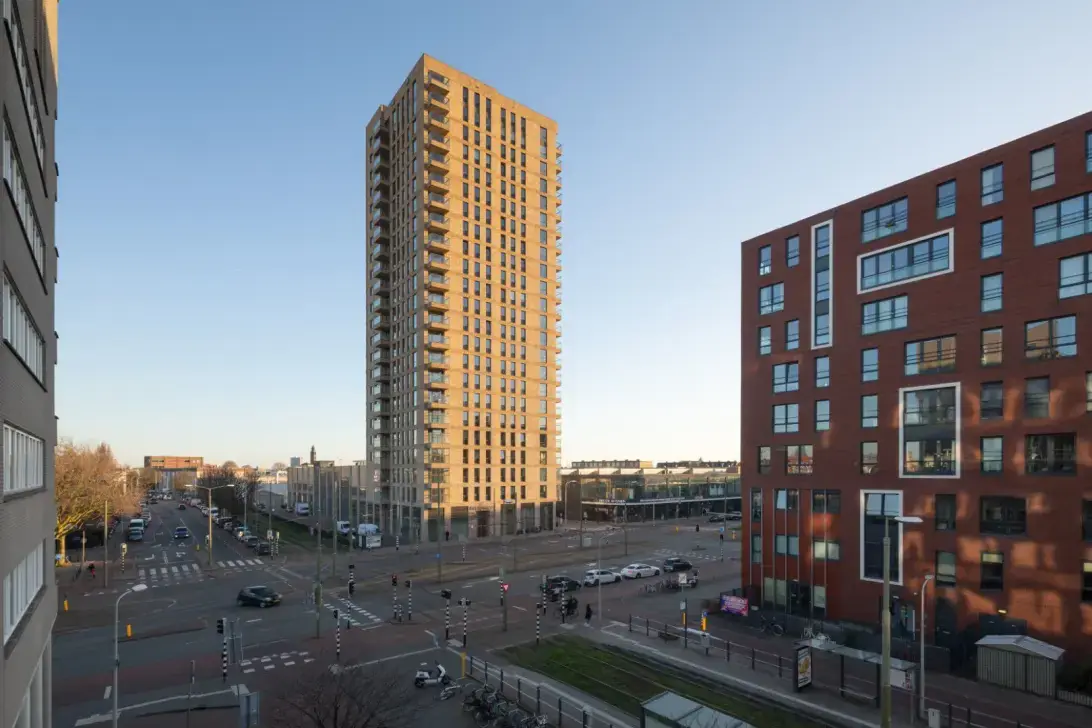
Transformation: From Office to Home
The shift to hybrid and remote work has left many office blocks underused. Converting these spaces into homes combines urgency with sustainability. According to Natuur & Milieu, renovating emits 50–85% less CO₂ from material production than new builds—no extra land is consumed, and embodied carbon is minimized.
Successful transformations require:
Flexible floor plans to accommodate living spaces.
Upgrades to insulation, plumbing, and fire safety.
Incentives that align the interests of property owners, developers, and local governments.
Bridging the financial gap between office valuations and residential appraisals through loans or grants could accelerate conversions nationwide.
Sustainability Advantages
Renovation not only boosts housing supply but also advances the Netherlands’ climate goals. Key environmental benefits include:
Lower CO₂ Emissions: Reuse of existing materials slashes embodied carbon by up to 85% compared to new construction.
Resource Efficiency: Fewer raw materials are required, reducing pressure on quarries and factories.
Preservation of Greenfield Sites: Urban infill prevents sprawl, protecting natural landscapes and farmland.
By prioritizing renovation, policymakers can deliver homes more quickly and sustainably than through greenfield development alone.
Policy Barriers and Incentives
While the technical potential is clear, current policies often favour new builds. Key obstacles include:
Subsidy Limitations: Most grants and tax incentives target new construction, not conversions or extensions.
Complex Permit Procedures: Renovation projects must navigate multiple permit layers—zoning, heritage, environmental—often at municipal discretion.
Rigid Building Codes: Fire safety, insulation, and accessibility standards can be prohibitively expensive to retrofit.
To tap the full renovation potential, the government could:
Extend existing housing subsidies to include splitting, topping up, and transformations.
Introduce streamlined ‘fast track’ permits for renovation projects that meet pre-defined sustainability criteria.
Offer low-interest loans and matching grants specifically for fire safety upgrades and structural reinforcements.
Such measures would encourage private developers and woningcorporaties (social housing associations) to prioritise renovation as a viable pathway.
Meeting the 2030 Housing Target
According to Statistics Netherlands (CBS), over 73,000 new homes were built in 2022, with nearly 15,000 units added through transformation and division. The EIB and Natuur & Milieu argue that this figure could multiply if policy frameworks shift in favour of renovation. By unlocking even a portion of the estimated 100,000–150,000 potential units, the Netherlands can make substantial strides toward its 2030 goal.
Smart policy design not only accelerates delivery but also distributes housing development more evenly across municipalities. Renovation projects are often less controversial than greenfield sites, making them politically palatable in both urban centres and smaller towns.
Conclusion
Renovating existing buildings offers a win–win solution to the Dutch housing shortage: it delivers homes faster, at lower environmental cost, and with less land consumption than traditional new builds. By embracing splitting, topping up, and transformation—and by reforming subsidies and regulations—the government can unlock an additional 100,000 to 150,000 homes by 2030.
Looking for your next rental home? For the easiest way to find rental listings in the Netherlands, visit Luntero.
Understand Dutch rental terms before you sign the lease.
Renting in the Netherlands comes with unique rules, legal phrases, and housing abbreviations that can be tricky. The Luntero Rental Glossary is your guide to every rental term — from tenancy agreements, deposits, and agency fees to utility charges, rent control, and tenant rights. Whether you’re new to renting, moving as an expat, or just want to avoid hidden costs, our glossary helps you rent smarter, negotiate better, and protect yourself from mistakes.