One-Third of New Amsterdam Homes Are Social Housing, Annual Report Reveals
Recent annual figures show that social housing units account for 34% of all new homes in Amsterdam, highlighting the crucial role of housing corporations in the city’s rental market.
Guide last updated on: November 1, 20254 min read
Table of Contents
Table of Contents
Further Reading on Renting in the Netherlands
Newest Properties in the Netherlands
Explore the latest properties added to Luntero. Find new apartments, houses, and studios across the Netherlands — updated daily to help you discover your next home faster.
Why Luntero
One Workspace for Your Dutch Rental Search
Luntero brings represented apartments, rooms, studios and houses from Dutch rental sources into one searchable place. Use the available filters to narrow your options, then check the original listing for current availability, price, conditions and application steps.
Listings From Many Dutch Sources
Browse rental listings collected from Funda, Pararius, Kamernet and other supported sources in one place. Coverage is broad but not exhaustive, and the original listing remains authoritative.
Intuitive User-Friendly Interface
Navigate our clean and straightforward design effortlessly on both desktop and mobile devices for a seamless apartment, house, or room hunting experience in the Netherlands.
Multilingual Support for Expats & Locals
Browse rental listings in English, Dutch, Spanish, French, German, and more. Luntero ensures you can find your next home in the Netherlands in the language you're most comfortable with.
Regular Listing Refreshes
Luntero refreshes collected listings regularly and search alerts email new matches after a successful check. A source can change between refreshes, so verify decisive details there.
Understand Dutch rental terms before you sign the lease.
Renting in the Netherlands comes with unique rules, legal phrases, and housing abbreviations that can be tricky. The Luntero Rental Glossary is your guide to every rental term — from tenancy agreements, deposits, and agency fees to utility charges, rent control, and tenant rights. Whether you’re new to renting, moving as an expat, or just want to avoid hidden costs, our glossary helps you rent smarter, negotiate better, and protect yourself from mistakes.
One-Third of New Amsterdam Homes Are Social Housing, Annual Report Reveals
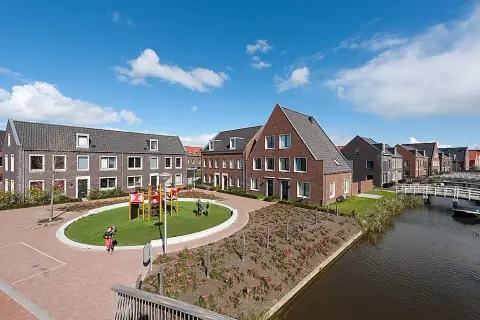
Amsterdam’s rental market saw a significant boost in social housing last year, as newly released figures from housing corporations show that 34% of all newly built homes in the city fall under the social rental category. This marks a strong performance by woningcorporaties (housing corporations) amid ongoing affordability challenges in the Dutch capital.
What Is Social Housing in the Netherlands?
In the Dutch context, social housing—or sociale huur—refers to rental properties offered at below-market rates to tenants who meet income criteria. These homes are managed by woningcorporaties, nonprofit housing providers regulated by government policy to prioritize affordability and social objectives. Social housing programs often work alongside huurtoeslag (housing benefit), a subsidy available to eligible low- and middle-income tenants.
The Role of Housing Corporations and the MRA Platform
Housing corporations in the Amsterdam Metropolitan Region, known as the Metropoolregio Amsterdam (MRA), have collaborated for three years under the Platform Corporaties Metropoolregio Amsterdam (PCMRA). The PCMRA aims to accelerate the delivery of affordable rental units across the region, sharing resources, best practices, and joint development pipelines. As part of this initiative:
Corporations coordinated planning and permitting to streamline construction.
Investment was channeled to high-need areas within the city and surrounding municipalities.
Efforts were made to align with municipal targets for social housing quotas.
This regional approach helps spread the benefits of social housing beyond Amsterdam’s city limits, ensuring a more balanced supply across the MRA.
Key Figures: Construction, Demolition, and Sales
Last year, the combined housing stock of corporations in Amsterdam and its surrounding municipalities increased by 2,400+ homes, driven by heightened construction activity:
4,248 new homes were completed by corporations in the MRA.
Of these, 4,041 units (95%) were social rental homes.
In Amsterdam alone, 2,008 new social units were built, resulting in a net increase of 733 homes after accounting for demolitions and sales.
These numbers reflect both the successes and trade-offs in the sector:
Demolition: Over 700 older corporation-owned homes were taken down in Amsterdam, a higher figure than in previous years.
Sales: Nearly 600 existing corporation homes were sold off, marking a slight decline compared to 2022 and 2023.
Despite these offsets, the substantial output of social units underscores the sector’s commitment to affordability.
Regional Variations in Social Housing Delivery
Social housing distribution varies widely across the MRA’s 30 municipalities. In 2024, the share of social rental homes among total new builds ranged from 10% to 42%:
Zuid-Kennemerland/IJmond led the region with 42% social units.
Amstelland Meerlanden recorded the lowest share at 10%.
Half of the municipalities did not deliver any new corporation-owned homes last year.
These disparities reflect local planning policies, land availability, and municipal priorities. Policymakers are now examining incentives to encourage more balanced development and prevent pockets of underinvestment.
Advancing Energy Efficiency in Social Housing
Alongside expansion, housing corporations continue to focus on energy efficiency improvements. The annual report highlights:
61% of corporation-owned homes now have an A or B energy label, classifying them as very energy-efficient.
Only 8% of the portfolio remains at the lower end (E, F, or G), down from higher levels in previous years.
Upgrades typically include enhanced insulation, modern heating systems, and better window glazing, which reduce utility costs for tenants and support the Netherlands’ climate goals.
Implications for Renters and Market Trends
For prospective renters in Amsterdam, the rising share of social housing offers hope for more affordable options in a market known for high demand and limited supply. Yet challenges remain:
Market Share: Although corporations manage nearly 400,000 homes in the region, their overall share of the rental market has dipped gradually.
Affordability: Average rents for newer social units are still out of reach for some low-income households without huurtoeslag support.
Waiting Lists: Demand for social housing far exceeds supply, leading to extensive waiting periods in many municipalities.
Looking ahead, continued collaboration under the PCMRA, targeted incentives, and municipal support will be key to sustaining the momentum in social housing delivery.
Conclusion: Building a Balanced Rental Market
The latest annual figures demonstrate the vital role of housing corporations in bolstering Amsterdam’s social housing stock, accounting for one-third of new homes. While regional disparities and market pressures pose challenges, coordinated efforts through the PCMRA and a strong focus on energy efficiency offer a roadmap for balanced and sustainable growth in the city’s rental sector.
Ready to explore available rental listings and find your next home in the Netherlands? Visit Luntero for the easiest way to search and secure your ideal rental property!
Understand Dutch rental terms before you sign the lease.
Renting in the Netherlands comes with unique rules, legal phrases, and housing abbreviations that can be tricky. The Luntero Rental Glossary is your guide to every rental term — from tenancy agreements, deposits, and agency fees to utility charges, rent control, and tenant rights. Whether you’re new to renting, moving as an expat, or just want to avoid hidden costs, our glossary helps you rent smarter, negotiate better, and protect yourself from mistakes.