A fee charged for administrative actions, which is almost always illegal when levied on a tenant by a landlord's agent.
Huur per maand
The primary recurring cost of a rental property, often presented as a single figure that masks a variety of underlying components.
Terms from the same part of the rental process, so you can read them together instead of looking each one up separately.
A fee charged for administrative actions, which is almost always illegal when levied on a tenant by a landlord's agent.
An administrative fee, often called 'contractkosten' or a lease initiation fee, is a charge for drawing up the rental agreement, the legality of which is highly questionable.
'Leges' are administrative fees charged by government bodies for providing a specific service or processing an application.
An agency fee, also known as a broker fee or 'courtage', is a charge for real estate brokerage services which, by law, cannot be charged to a tenant if the agent is working for the landlord.
An alarm system fee is a recurring cost for professional monitoring, and responsibility for payment depends on what is agreed in the rental contract.
Paying residential rent annually is not a standard practice in the Netherlands; the law and market are based on monthly payments.
The Rent Per Month entry is most useful when the explanation connects exceptions with contracts and documents.
Every glossary entry that belongs to Rental Costs, collected on one page.
See TermsLook up a term, abbreviation or contract phrase and get a plain-language explanation with Dutch and English wording.
Search termsLonger guides that walk through applications, contracts, costs and moving, with the terminology used in context.
Read the guidesExplore the latest properties added to Luntero. Find new apartments, houses, and studios across the Netherlands — updated daily to help you discover your next home faster.
Luntero brings represented apartments, rooms, studios and houses from Dutch rental sources into one searchable place. Use the available filters to narrow your options, then check the original listing for current availability, price, conditions and application steps.
Browse rental listings collected from Funda, Pararius, Kamernet and other supported sources in one place. Coverage is broad but not exhaustive, and the original listing remains authoritative.
Navigate our clean and straightforward design effortlessly on both desktop and mobile devices for a seamless apartment, house, or room hunting experience in the Netherlands.
Browse rental listings in English, Dutch, Spanish, French, German, and more. Luntero ensures you can find your next home in the Netherlands in the language you're most comfortable with.
Luntero refreshes collected listings regularly and search alerts email new matches after a successful check. A source can change between refreshes, so verify decisive details there.
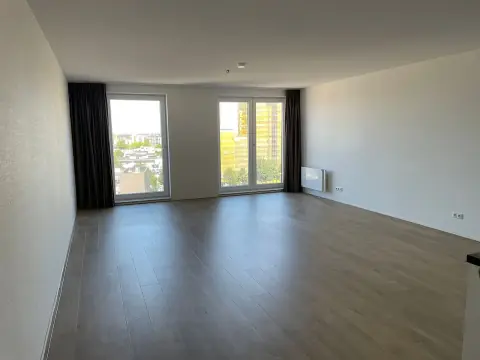
The maandelijkse huur, or monthly rent, appears to be the most straightforward figure in any rental agreement. It's the big number you see in the advertisement, the one you budget for each month. However, this single amount is often a composite figure, and understanding its components is crucial for any tenant in the Netherlands. The law makes a sharp distinction between the 'basic rent' for the use of the space and additional 'service charges' for other provided services. Failing to grasp this distinction can lead to significant financial misunderstandings, from being unable to challenge annual rent increases to being overcharged for services you barely use. The advertised price is rarely the full story, and a tenant's first question should always be: "What exactly does this monthly payment cover?"
The kale huur is the core of your rental payment. It is the price you pay solely for the use of the living space—the walls, floors, and ceiling. This figure is legally significant for several reasons. Firstly, it is the amount used to determine whether a property falls into the social (regulated) or free (vrije sector) housing market at the start of a new contract. This is determined by comparing the kale huur to the liberalisatiegrens (liberalisation threshold), a government-set limit that changes annually. If the basic rent is below this threshold, the tenant has significantly more rights and protections regarding rent price and increases. Secondly, the annual rent increase, which is also regulated, is calculated as a percentage of the kale huur, not the total monthly payment. Landlords who are vague about this breakdown may be doing so intentionally to obscure the property's legal status or to apply rent increases to the total amount, a practice that is not permitted.
Servicekosten are the costs for services and utilities that the landlord provides on top of the bare living space. This is a broad category that can include a wide range of items, such as the electricity and cleaning for common areas (stairwells, elevators), maintenance for a shared garden, water usage for the building, or certain administrative fees. The crucial rule governing service charges is that the landlord cannot profit from them. They are legally required to charge the tenant only for the actual costs incurred. To ensure this, the landlord must provide the tenant with a detailed, itemized annual statement (jaarafrekening) showing the total costs and how the tenant's monthly advance payments stack up against their share of the actual expenses. This often results in either a refund or an additional bill. However, this area is ripe for abuse. Some landlords lump illegitimate costs into the service charges or fail to provide the annual statement altogether. Tenants have the right to demand this statement and to challenge unreasonable or unsubstantiated costs at the Huurcommissie (Rent Tribunal).
Prospective tenants should be extremely wary of contracts that offer an 'all-in' rent (all-in huur), where a single price is quoted without any distinction between basic rent and service charges. While it might seem simple, an all-in contract is legally disadvantageous for the tenant. Without a specified kale huur, it's impossible to determine if the rent is fair according to the points system (if in the regulated sector), it's impossible to verify if the annual rent increase is legally compliant, and it's impossible to check the validity of the service charge settlement. In fact, if a tenant has an all-in contract, they can formally request the landlord to split the price. If the landlord refuses, the tenant can start a procedure at the Huurcommissie to have them determine a fair breakdown. In many cases, this results in the basic rent being set at a much lower level, providing the tenant with more rights and a potentially lower monthly payment. An all-in price is a major red flag that suggests an unprofessional or even malicious landlord.

€1,159.00 / month

€600.00 / month

€932.00 / month

€1,187.00 / month

€1,845.00 / month

€933.00 / month

€1,899.00 / month

€765.00 / month

€714.00 / month

€1,596.00 / month

€714.00 / month

€1,210.00 / month